An indefinite national ban on fishing for sturgeon species has been introduced in the Bulgarian section of the Danube River and the Black Sea
10 Dec, 2025 | 14:16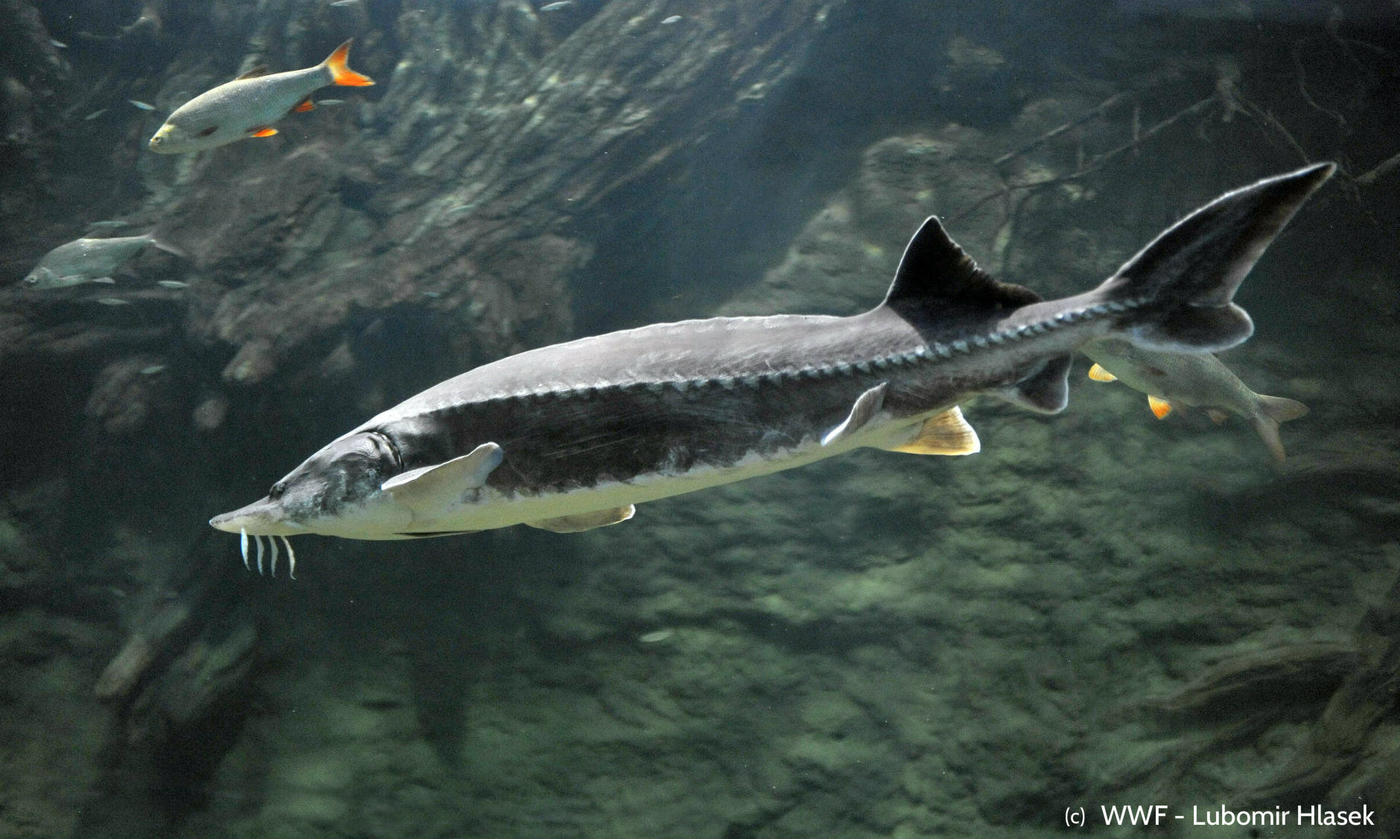
- Sturgeon populations in the Danube River and the Black Sea need decades to recover. The Ministry of Environment and Water does not rule out the possibility of using this biological resource in the future, after its recovery.
The Ministry of Environment and Water and the Ministry of Agriculture and Food have introduced an indefinite ban on fishing for sturgeon species in the Bulgarian section of the Danube River and the Black Sea, effective from 1 January 2026. The order of the two ministers - of Environment and Water Manol Genov and of Agriculture and Food Dr. Georgi Tahov - is yet to be published in the State Gazette.
Sturgeon are among the most endangered species worldwide due to loss of natural habitats, disruption of breeding migration corridors, water pollution, illegal fishing and caviar trade.
The order prohibits the fishing of the following sturgeon species in the Bulgarian waters of the Danube River and the Black Sea: beluga (Huso huso), Russian sturgeon (Acipenser gueldenstaedtii), trout (Acipenser stellatus), and rudd (Acipenser ruthenus). The Danube River is the last river in Europe with still viable populations of these four species. In the past, two other species were found in the river - German sturgeon (Acipenser sturio) and sturgeon/Atlantic sturgeon (Acipenser nudiventris), which are now considered extinct.
National fishing bans on beluga, Russian sturgeon, trout, and chum salmon for the purpose of conservation and recovery of the species have so far been issued successively for the periods 2012-2015, 2016-2020 and 2021-2025, with no periods in between when fishing for sturgeon species was permitted. The current national ban is the first of its kind.
In response to the threat of extinction of these highly endangered sturgeon species, a fishing ban has existed for the Danube River and the Black Sea for the past 10 years and is currently in place in Romania, Serbia, Austria, Georgia, Russia, Turkey, etc.
The restoration of natural stocks of sturgeon species is a long process, as these species have a long lifespan and reach sexual maturity after many years of existence. An adequate legislative framework for the protection of these species is of particular importance, as they represent a shared stock for the Danube and Black Sea countries as migratory species. They are included in the European Red List of the International Union for Conservation of Nature (IUCN), as well as in the national Red Book of Bulgaria and are subject to protection under a number of international conventions and European acts.
The order for an indefinite ban on fishing for sturgeon species in the Bulgarian section of the Danube River and the Black Sea will provide a time horizon for scientific and conservation projects for the protection of these species. It can be changed or canceled if their conservation status is improved or if other changes are necessary (e.g. taxonomic changes of species).
Due to their long life cycle and late sexual maturity, sturgeon populations in the Danube River and the Black Sea need decades to recover. The Ministry of Environment and Water does not rule out the possibility of using this biological resource in the future, after its recovery.
The order of the two ministers is published on the website of the Ministry of Environment and Water at https://www.moew.government.bg/bg/priroda/zakonodatelstvo/nacionalno-zakonodatelstvo/zapovedi/, of the Ministry of Agriculture and Food in the "Current" section - (https://www.mzh.government.bg/bg/ministerstvo/aktualno/) and in the Fisheries Sector - (https://www.mzh.government.bg/bg/sektori/ribarstvo/), as well as on the website of the Executive Agency for Fisheries and Aquaculture, which exercises control over the regimes for all freshwater and marine fish species.
Since 1998, all sturgeon species have been included in the Convention on International Trade in Endangered Species of Wild Fauna and Flora (CITES). In 2006, a ban was introduced on the export and trade of black caviar harvested from wild sturgeon from the Black Sea and the Danube River, and in 2000, a universal caviar labelling system was introduced to prevent illegal trade, with these labels also mandatory for caviar trade within the European Union.
As migratory fish that cross national borders, Danube sturgeons are protected by the Convention on the Conservation of Migratory Species of Wild Animals (CMS/Bonn Convention), and as a critically endangered species group by the Convention on the Conservation of European Wild Flora and Fauna and Natural Habitats (Bern Convention).
In 2018, a Pan-European Sturgeon Action Plan (PANEUAP) was adopted, created due to the dramatic decline in their population and the failure of earlier conservation efforts. It is valid until 2029 and constitutes the main strategic framework for the conservation of sturgeons across Europe, providing guidance and mandates for contracting parties to prevent the decline of European sturgeon populations to the status of “least concern” by introducing permanent fishing bans to keep poaching at low levels.
A complete permanent ban on sturgeon fishing in the entire Black Sea basin, regardless of the fishing method and fishing gear used, was also introduced on the recommendation of the General Fisheries Commission for the Mediterranean (GFCM), adopted at the Commission’s annual meeting in 2024 and entered into force on 19 April 2025.