Chemicals management institutions in Bulgaria held a meeting with the Executive Director of the European Chemicals Agency
10 Oct, 2025 | 11:58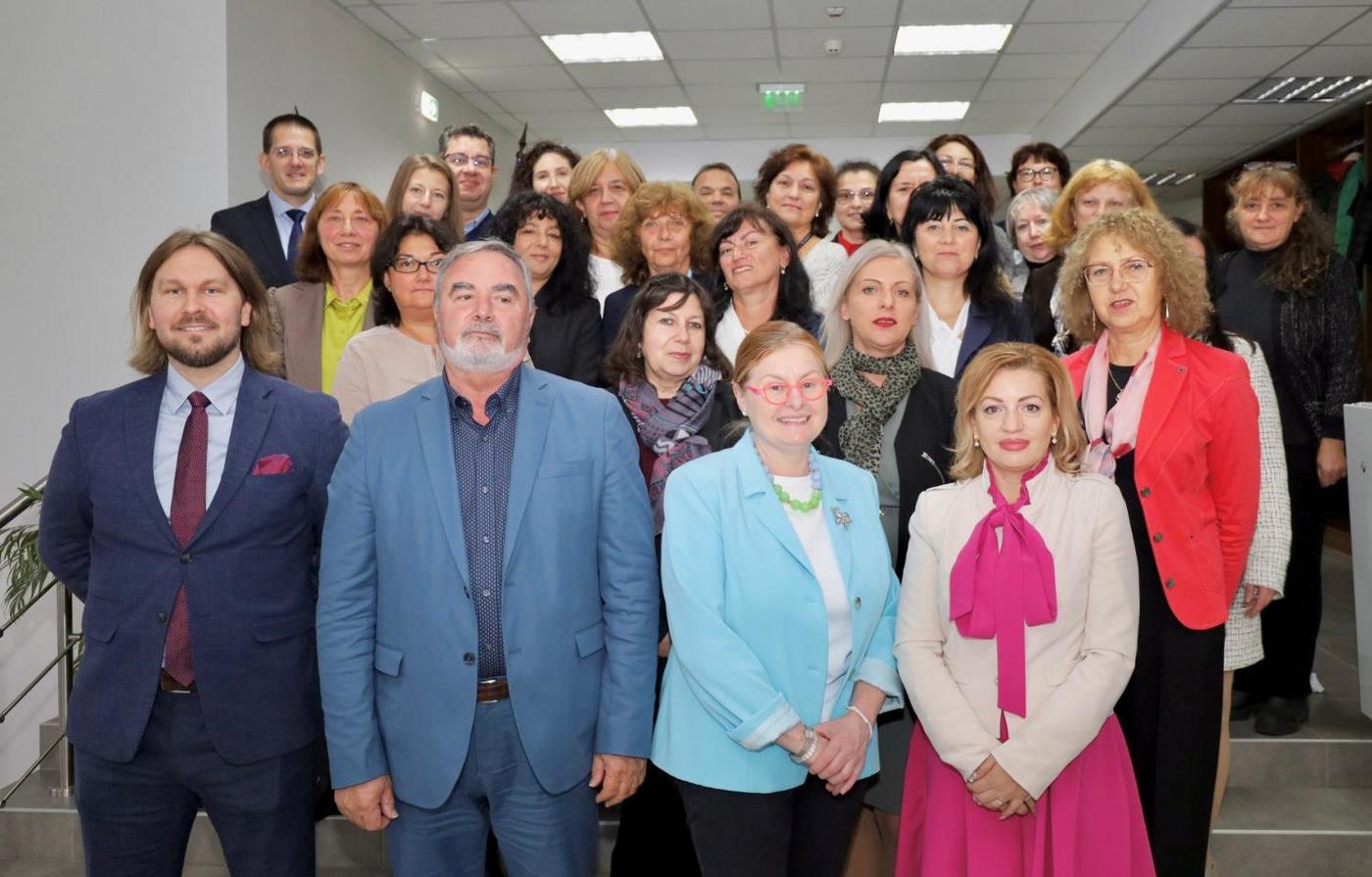
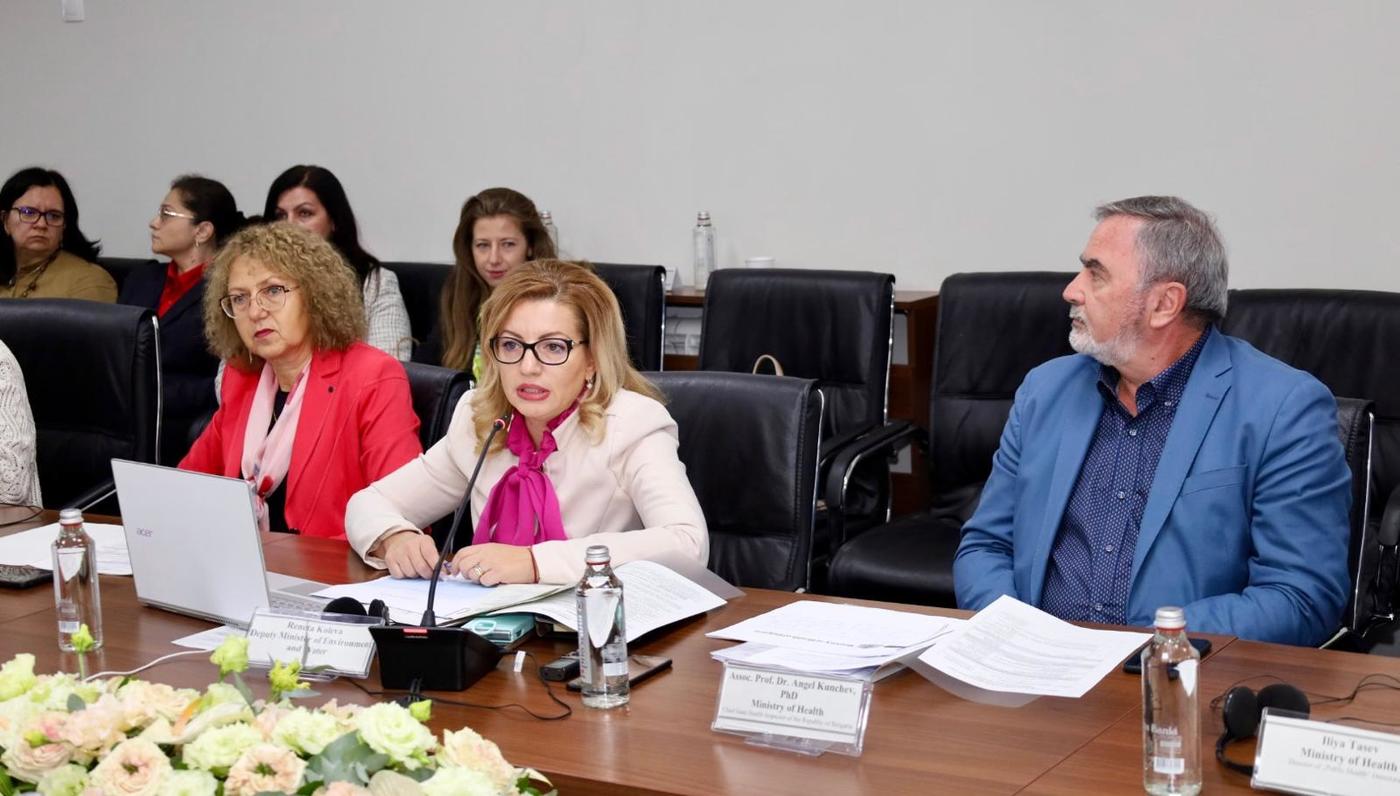
- The MOEW hosted Dr. Sharon McGuinness’ visit to Sofia
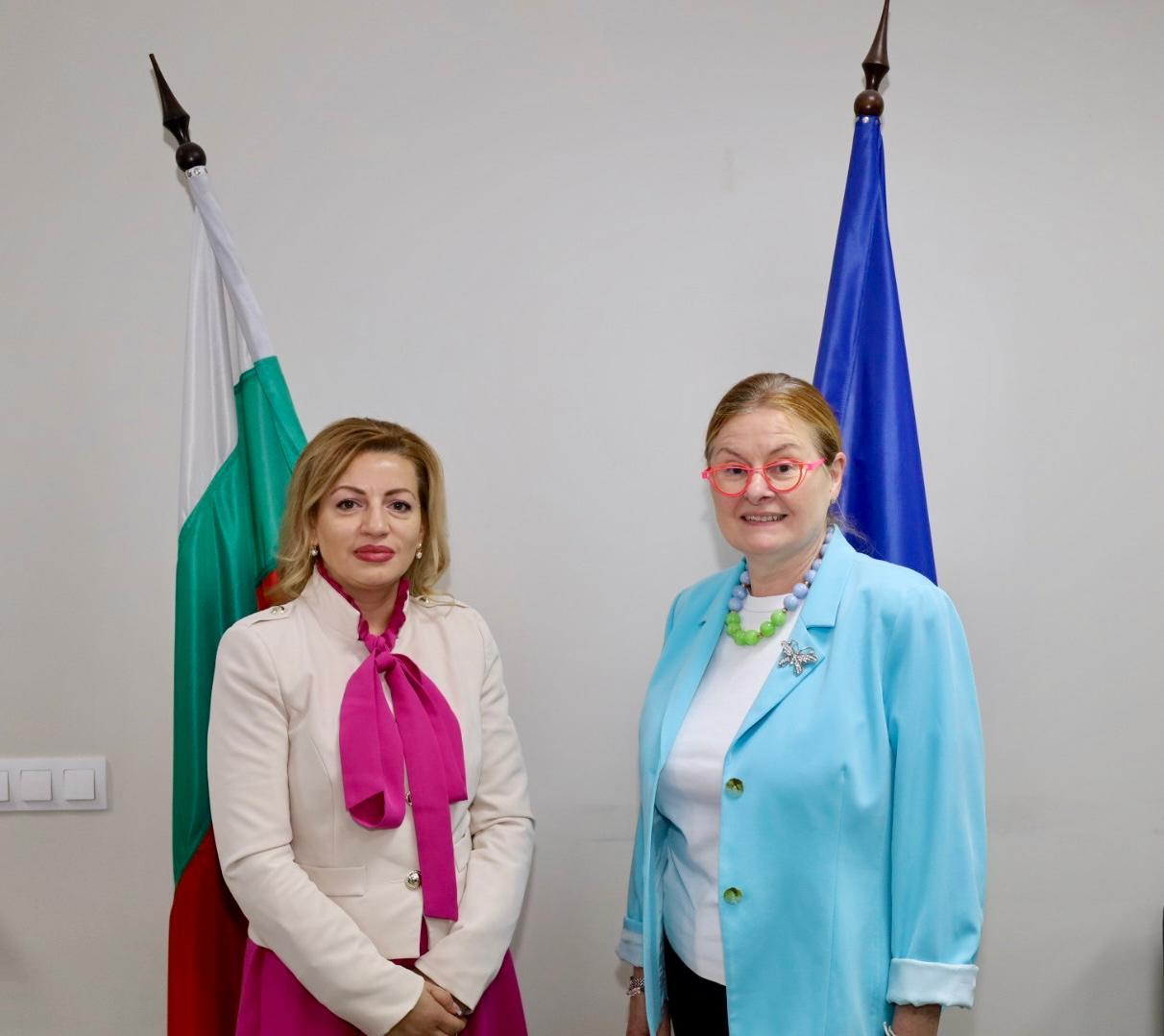
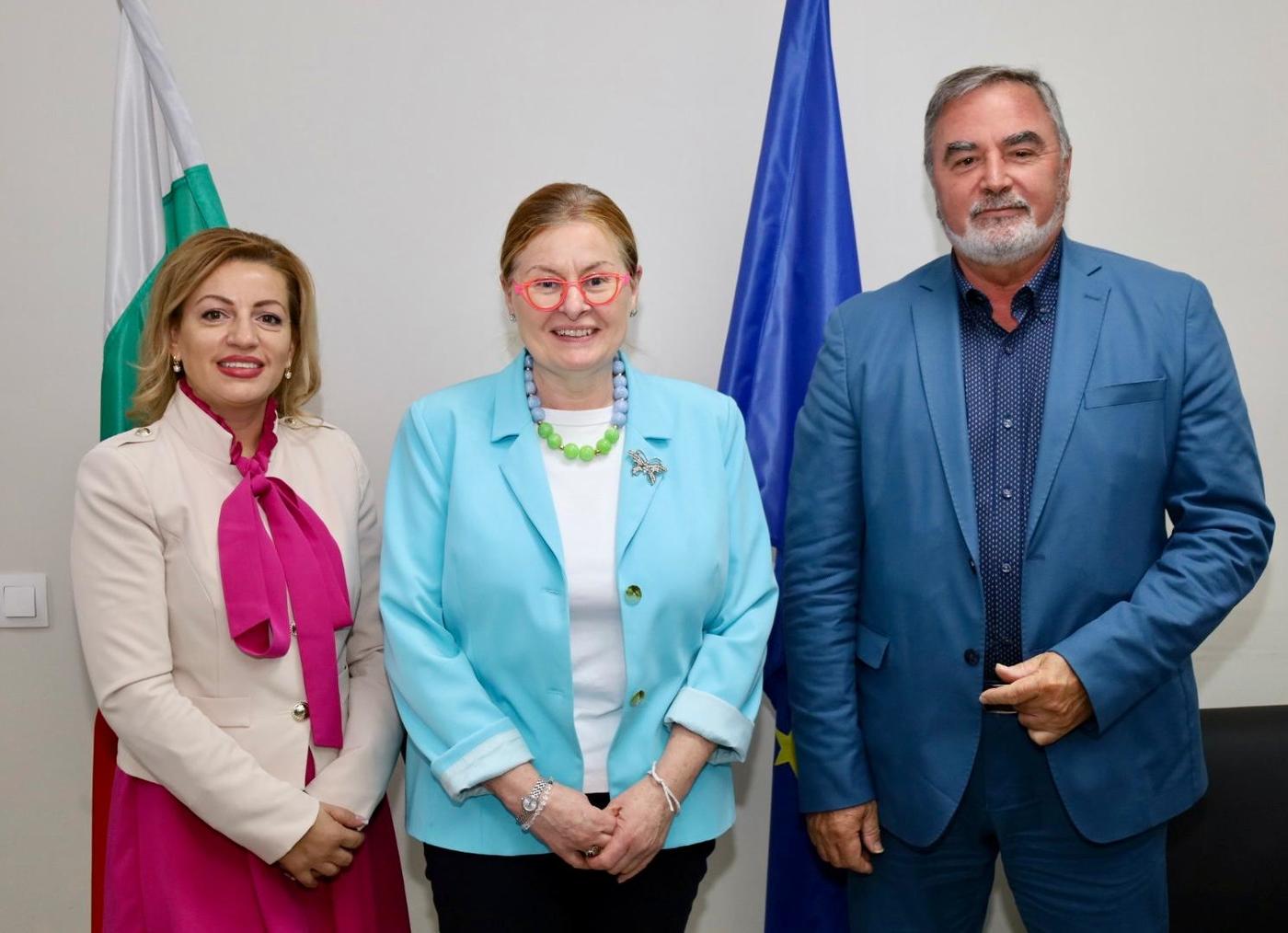
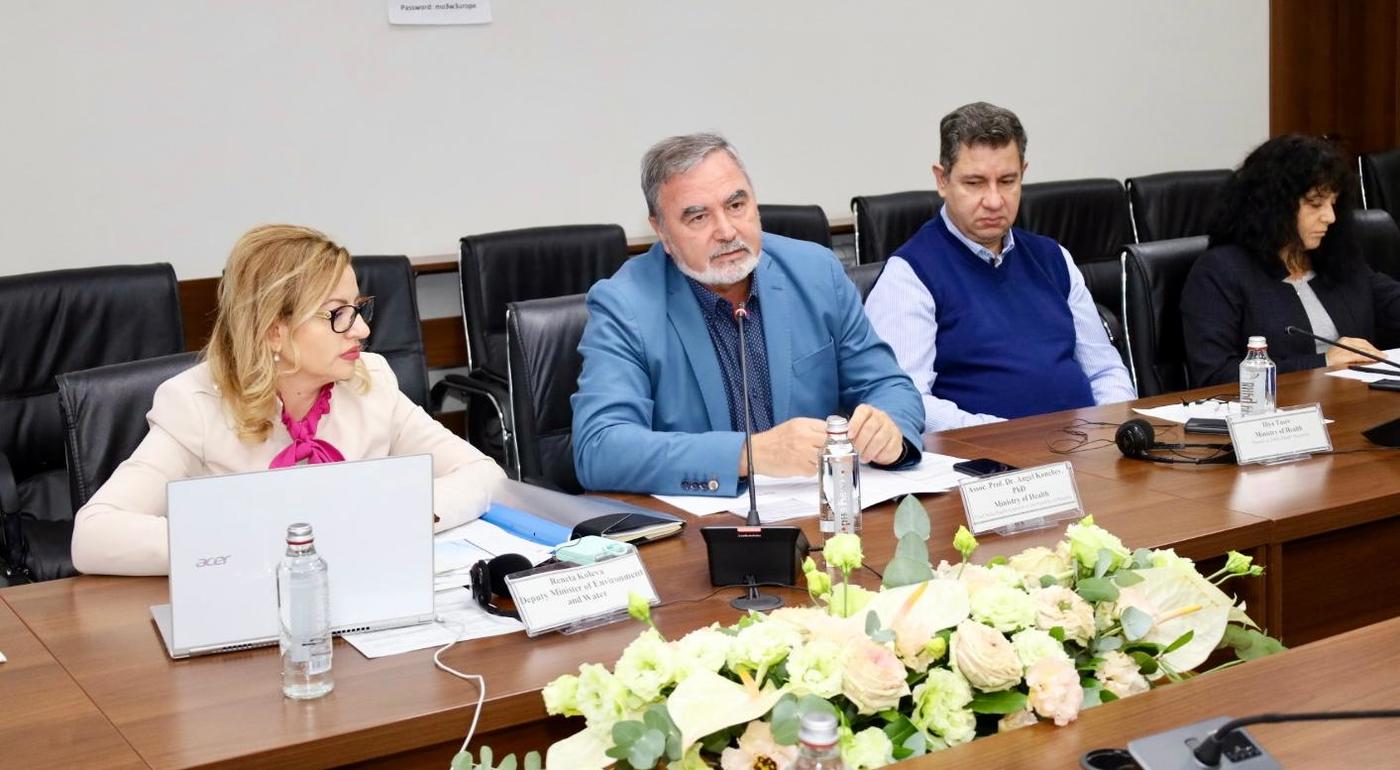
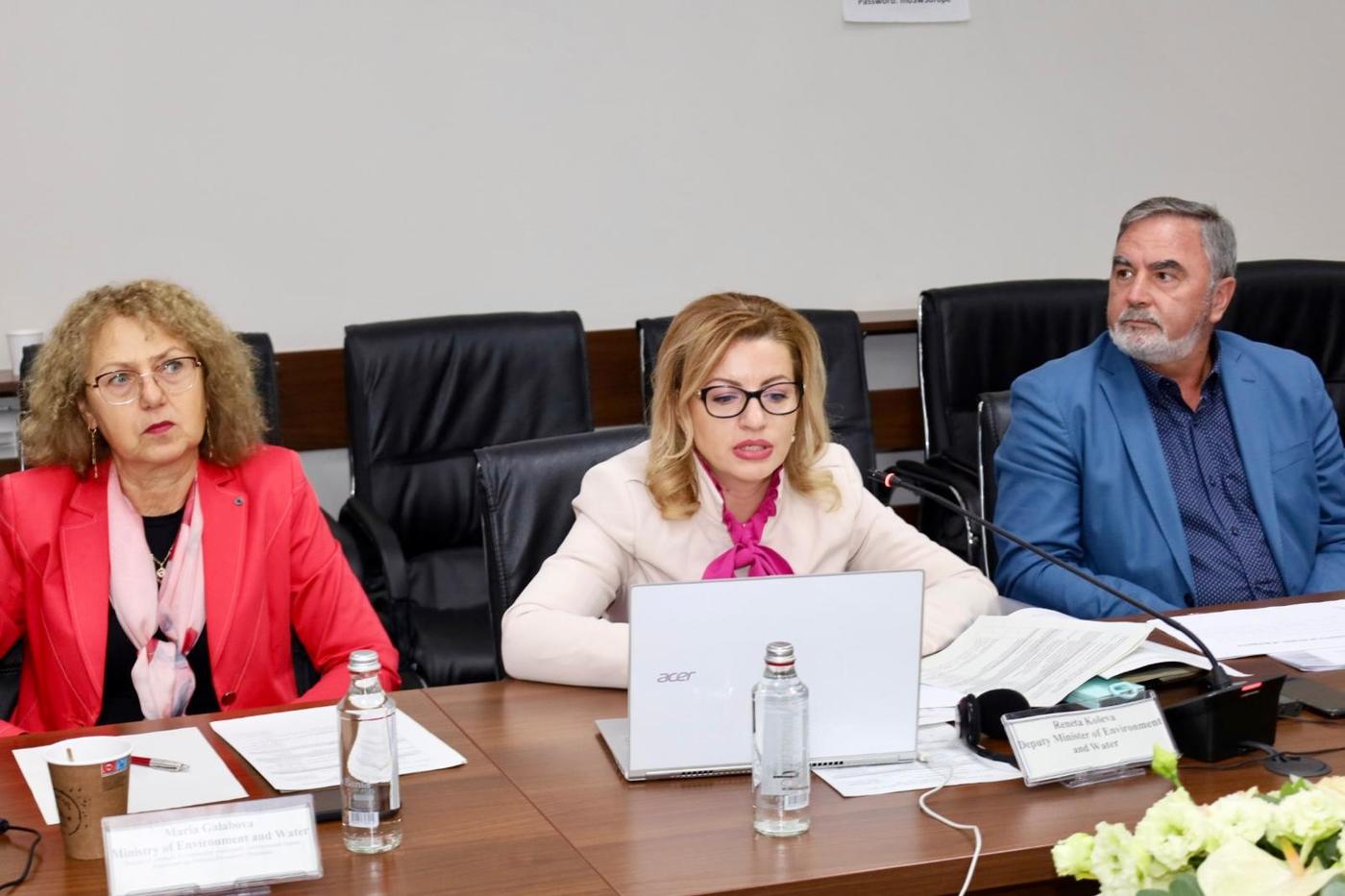
A high-level meeting was held at the Ministry of Environment and Water (MOEW) between Dr. Sharon McGuinness – Executive Director of the European Chemicals Agency (ECHA), Reneta Koleva – Deputy Minister of Environment and Water, and Assoc. Prof. Dr. Angel Kunchev – Chief State Health Inspector of the Republic of Bulgaria.
The meeting brought together representatives of national institutions with a key role in chemicals management:
- Ministry of Environment and Water, competent authority for the implementation of the REACH and CLP Regulations for the management of industrial chemicals;
- Ministry of Health, competent for the implementation of biocidal legislation and the National Centre for Public Health and Analysis;
- Ministry of Economy and Industry, committed to creating conditions for economic growth, sustainable production and competitiveness.
Representatives of the scientific community also participated – the Bulgarian Academy of Sciences, Sofia University “St. Kliment Ohridski”, Medical University – Sofia, and the University of National and World Economy, some of which are nominated to the scientific committees of ECHA: the Committee for Risk Assessment – RAC and the Committee for Socio-Economic Analysis – SEAC.
The meeting was held to discuss current issues and outline the prospects in the field of chemicals management, cooperation between national institutions and ECHA as a key partner in the implementation of European legislation.
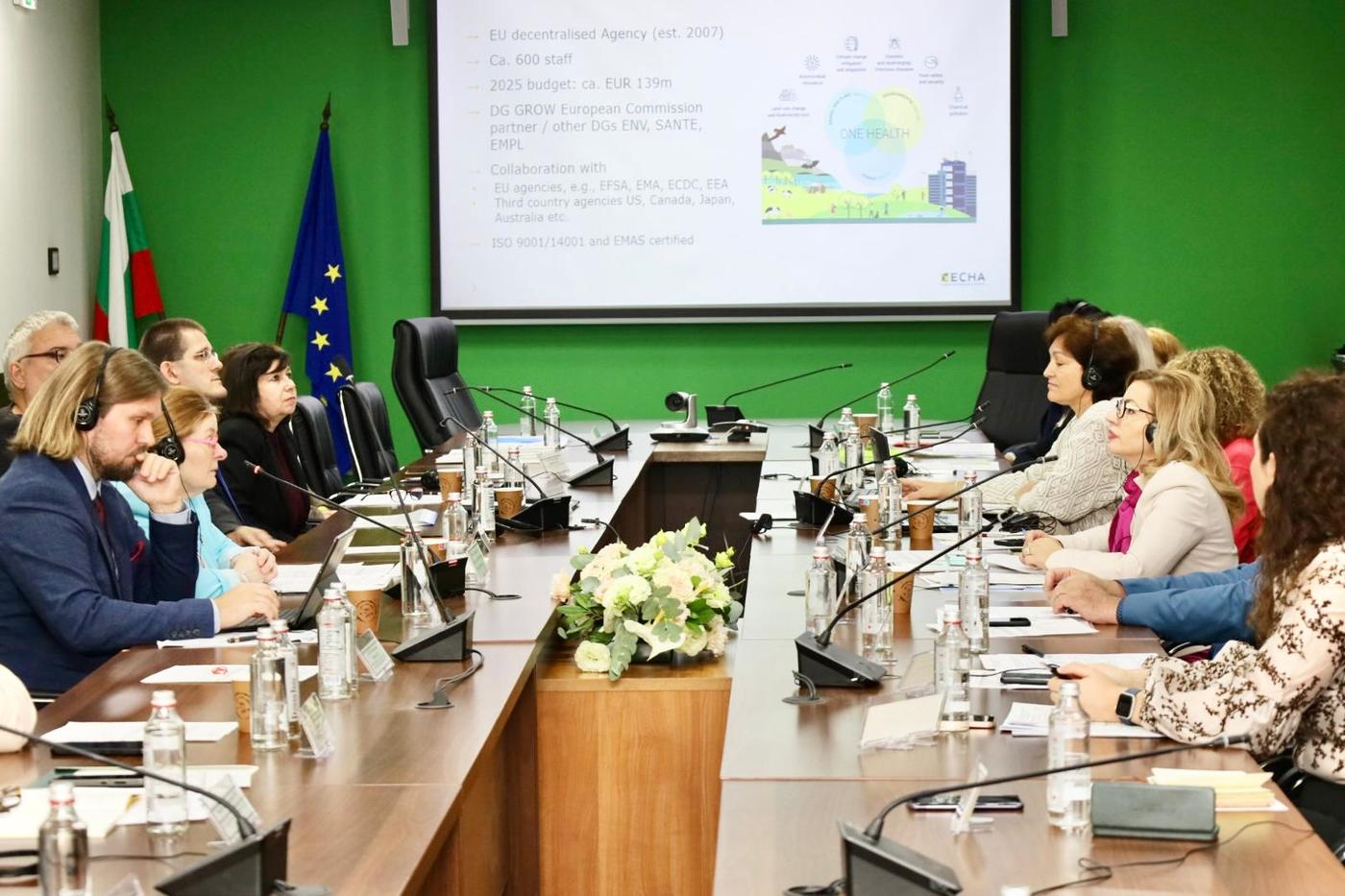
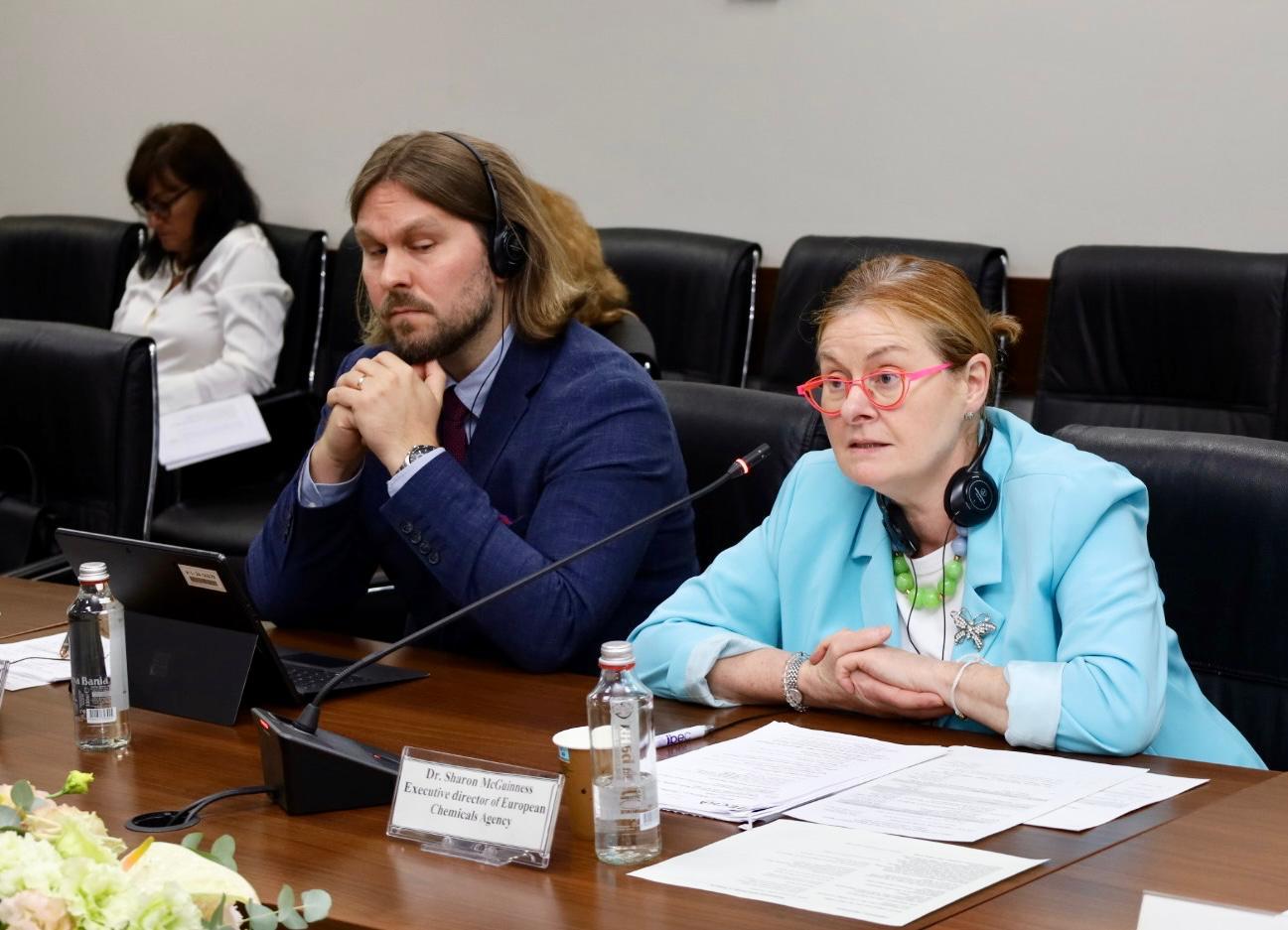
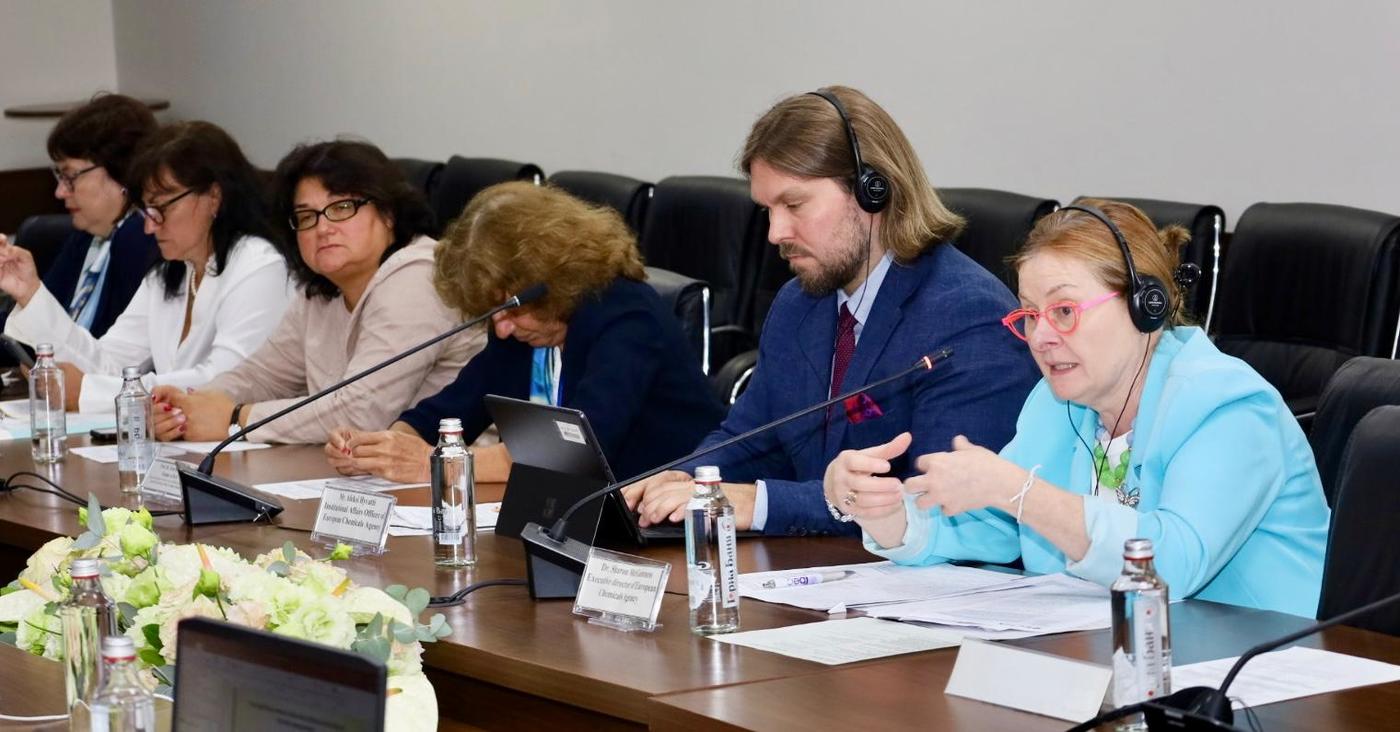
Dr. Sharon McGuinness presented the strategy, priorities and vision of the agency, whose role is to support the implementation of European measures and assist in the development of policies related to biocides and other hazardous substances. “Our role is to work directly with industry, helping them to comply with the legislative requirements,” she explained, pointing out that ECHA also acts as a scientific and technical body, supporting the European Commission and Member States in the implementation of chemicals legislation and providing an expert basis for informed decision-making in the field of protecting human health and the environment.
“I say this to emphasise that we do not actually develop policies, but implement policies that have already been adopted at European Union level. Our core work is related to the science that underpins policy-making. We implement the measures and ensure their implementation in practice,” stressed Dr Sharon McGuinness.
A key issue in the discussion was the European Commission’s proposal for a new ECHA regulation – an important step towards a clearer and more sustainable legal framework for the agency, which extends its mandate and sets higher expectations for both ECHA and national competent authorities.
“It is particularly important for us to understand how the new framework will ensure the active participation of Member States, how the necessary resources will be provided and how the cooperation between the Agency and the national administration will be strengthened,” said Deputy Minister Reneta Koleva, who presented the national legal framework and the institutional framework for the management of industrial chemicals. “The role of the Agency as a key partner in the implementation of European legislation is of utmost importance, especially in the context of our aspiration for a safe, sustainable and innovative chemical industry,” she emphasized.
Assoc. Prof. Dr. Angel Kunchev focused on the biocidal legislation and the regime implemented by Bulgaria during the transition period. “It is extremely important for us to have the opportunity for direct contact and discussion of open issues,” he pointed out.
Topics discussed included the necessary scientific and expert capacity for participation in the ECHA bodies, the national policy for small and medium-sized enterprises, the state and development of the chemical industry, environmental law enforcement, and in particular industrial chemicals and biocides.
Representatives of the scientific community introduced the guests to the country's latest achievements in the field of chemical assessment - a web-based platform for in silico assessment of toxic effects of chemicals, developed by the Institute of Biophysics and Biomedical Engineering of the Bulgarian Academy of Sciences, as well as new methodologies in toxicology to replace animal tests, presented by the National Center for Public Health and Analysis.
The European Chemicals Agency (ECHA) is an independent organization within the European Union. The European institutional family includes not only the European Commission, but also other bodies and decentralized structures. In total, there are 51 independent agencies, and ECHA is one of them. The agency began its work in 2007 and is part of the network of European Union institutions. It employs about 600 employees - regional experts, experts in activities related to biocides and environmental issues. The agency’s main partner is the EC’s Directorate-General for Growth, but ECHA also works closely with other directorates general – i.e. for Environment, Health and Food Safety (SANTE) and Employment. ECHA also cooperates with other European agencies, such as the European Medicines Agency (EMA), the European Food Safety Agency (EFSA) and the European Environment Agency (EEA). The agency also maintains contacts with organisations and institutions from third countries, such as the United States, Canada, Japan, and Australia.