Deputy Minister Atanas Kostadinov: Euro adoption and nature conservation are linked through sustainable development
24 Sep, 2025 | 12:08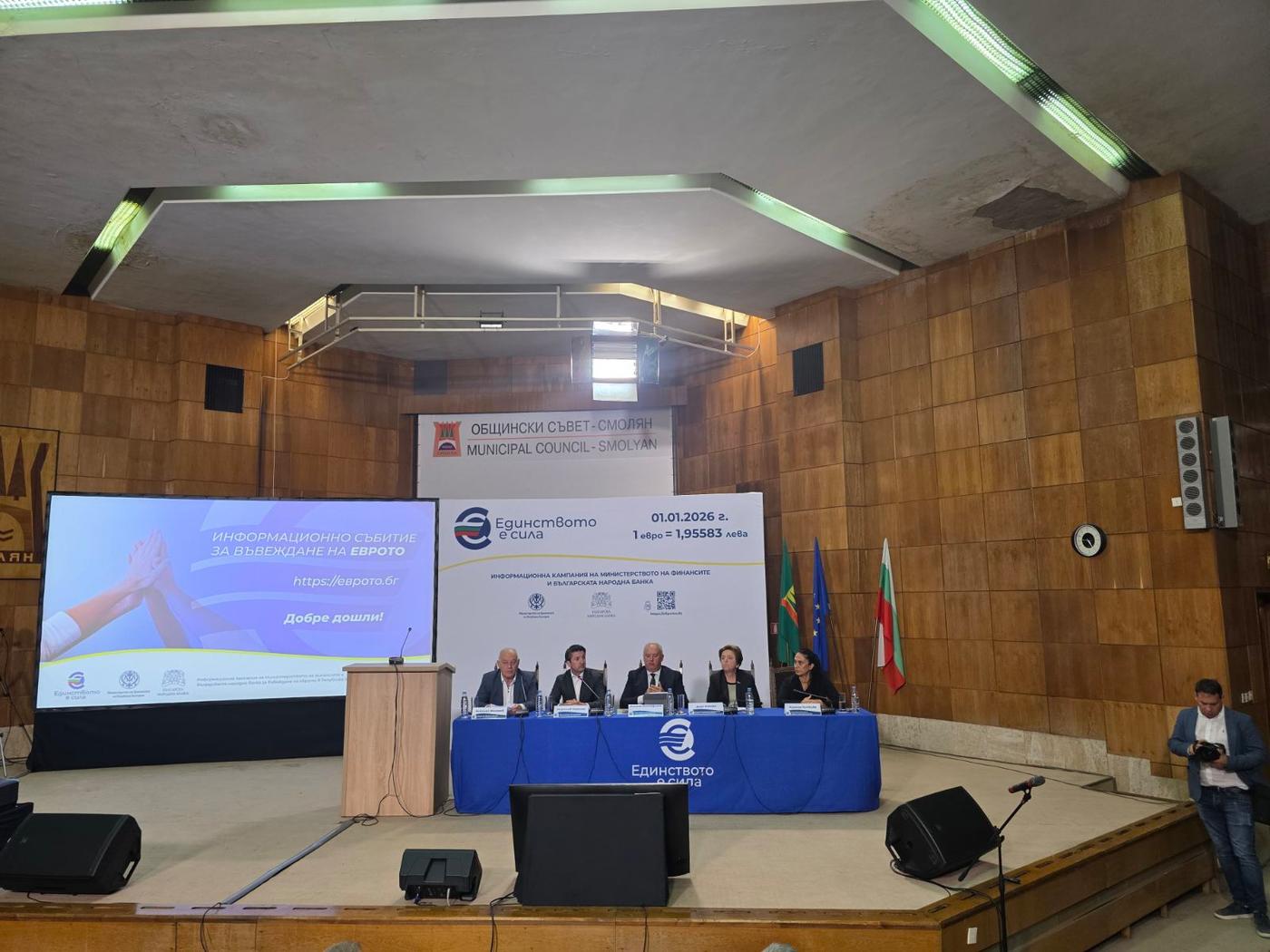
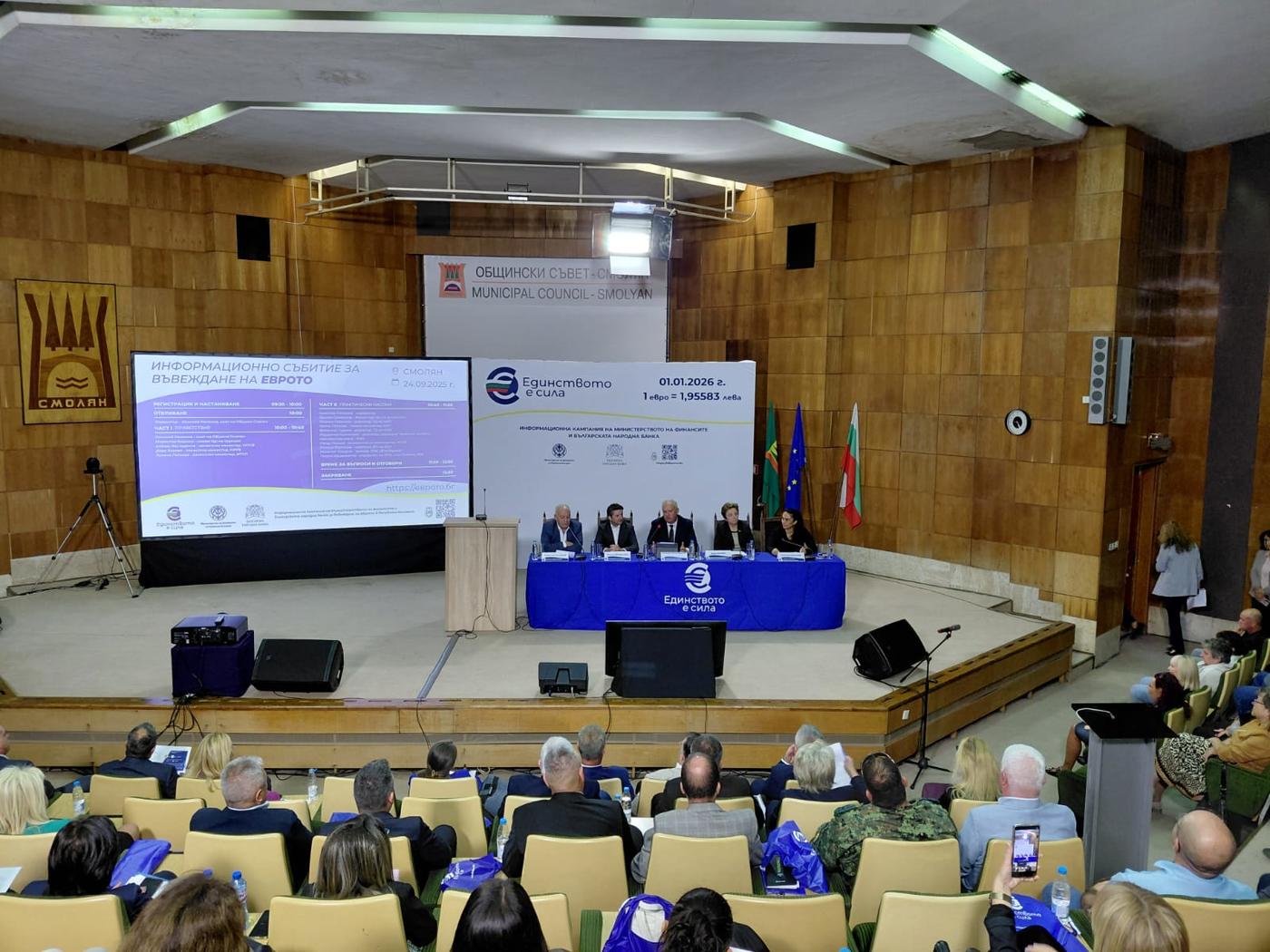
“The first reaction is that the introduction of the euro and environmental protection have nothing to do with each other. At first glance, it seems so, but the new European Union Nature Restoration Regulation shows that the connection is much deeper and is rooted in the principle of sustainable development,” said Deputy Minister of Environment and Water Atanas Kostadinov during an information meeting in Smolyan, part of the campaign for the adoption of the euro.
Deputy Minister Kostadinov emphasized that sustainable development implies an integrated view of economic, social, and environmental processes. “We cannot arrive at meaningful answers if we do not perceive this interconnectedness, which takes us to a completely different level. Membership in the single currency framework means predictability, both for family budgets and for companies and the state. In practice, this frees up resources that, under the new regulation, each country must direct to restoring and maintaining nature in good condition,” he explained.
Kostadinov noted that over 33% of Bulgaria's territory falls within the protected areas of the European Natura 2000 network. "The new European policy requires us to monetize our natural resources, the wealth we have, to be preserved, restored and developed, but at the same time this can also have a strong financial effect. Imagine a country with about 15-20% protected areas and Bulgaria with approximately 35%. The costs of maintaining and restoring nature in our country are higher, but it is precisely this wealth that can become a serious resource that, in monetary terms, can be directed towards green investments for companies, municipalities, non-governmental organizations and for the people themselves," he pointed out.
According to Deputy Minister Kostadinov, in Bulgaria we still do not have great success in the circular economy, but when we are in a single currency union, access to financing and opportunities for the implementation of projects by municipalities, regions and companies will be manifold easier. “This is a European and economic idea that has no analogue without membership in the eurozone,” he stressed.
Deputy Minister Kostadinov also outlined the importance of the ecosystem approach and ecosystem services in the context of the introduction of the euro. “When they are part of a single financial and currency regime, ecosystem services no longer have only a local value for a given population, municipality or country. They show an opportunity in which the Bulgarian economy and the Bulgarian product, including tourism, receive much wider access to markets and investments precisely because of our unique natural value,” the Deputy Minister of Environment and Waters pointed out.
In his words, the new European policies present Bulgaria with a challenge, but also with an opportunity to turn the wealth of its natural resources into an economic force that will support the sustainable development of the country.