May 15 marks World Climate Day
15 May, 2026 | 09:00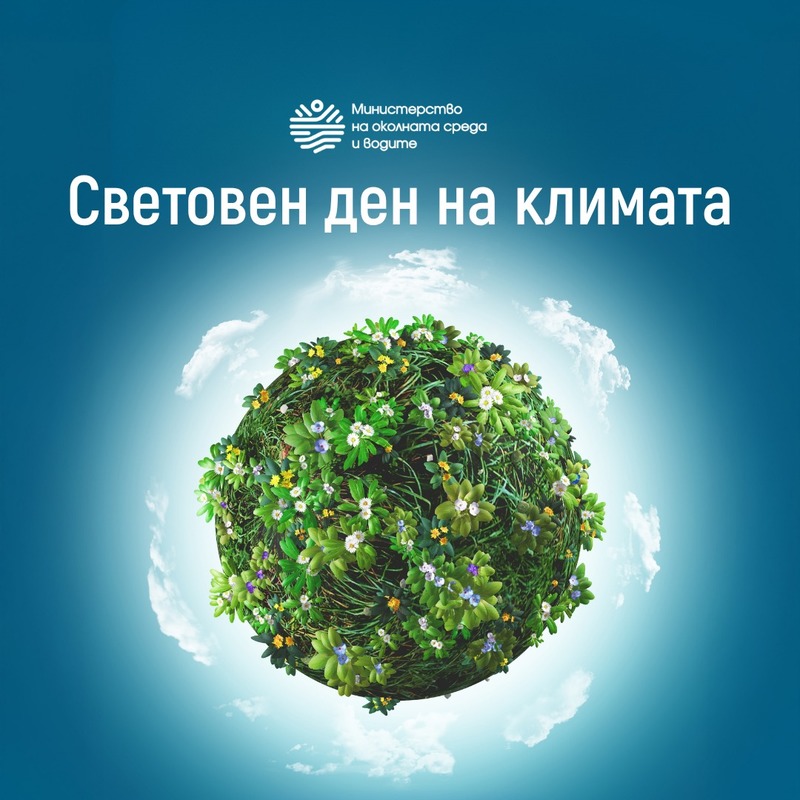
Climate Day was proclaimed by the member states of the United Nations Framework Convention on Climate Change, signed on June 5, 1992, in Rio de Janeiro, Brazil. In Bulgaria, the document was ratified in March 1995.
Climate Day draws the world’s attention to the need for collective action to address one of the greatest threats to life on our planet—climate change.
The use of coal, oil, and gas, intensive agriculture, deforestation, and many other human activities increase the amount of greenhouse gases in the air. This increases the Earth’s temperature, leading to the melting of polar ice caps, rising sea levels, the flooding of densely populated low-lying areas, and the extinction of species that regulate the quality of the environment.
On May 15, the global community is sending a message to governments and corporations to make bold commitments and take decisive action to protect the planet’s climate for future generations — actions related to restructuring the energy sector and increasing the use of renewable energy sources, such as water, wind, and solar power, as well as finding new energy sources. By engaging in public initiatives and making sustainable choices in their daily lives, people can be the catalysts for this change.
Over the years, several key documents have been adopted that aim to address climate change issues on a global scale.
The United Nations Framework Convention on Climate Change was adopted in 1992. Its goal is to keep greenhouse gas emissions at a level that does not have a negative impact on the climate system. The Convention has been ratified by 195 countries.
The next step toward addressing climate issues was the signing of the Kyoto Protocol in 1997. This protocol sets legally binding targets to support the reduction of greenhouse gas emissions in developed countries.
In 2015, the parties to the UN Framework Convention on Climate Change adopted a global agreement on climate change - the so-called Paris Agreement - to consolidate all existing binding and non-binding agreements into a unified system. Today, it is recognized that the years 2025 and 2026 are critical for the implementation of the Paris Agreement on reducing carbon emissions.
EU countries are legally committed to combating climate change by transitioning to a climate-neutral economy with net-zero greenhouse gas emissions by 2050. Detailed information on the EU’s work on climate change can be found here: