Minister Julian Popov: 40 years on – it is time to speak openly about the trauma of Chernobyl
17 Apr, 2026 | 11:47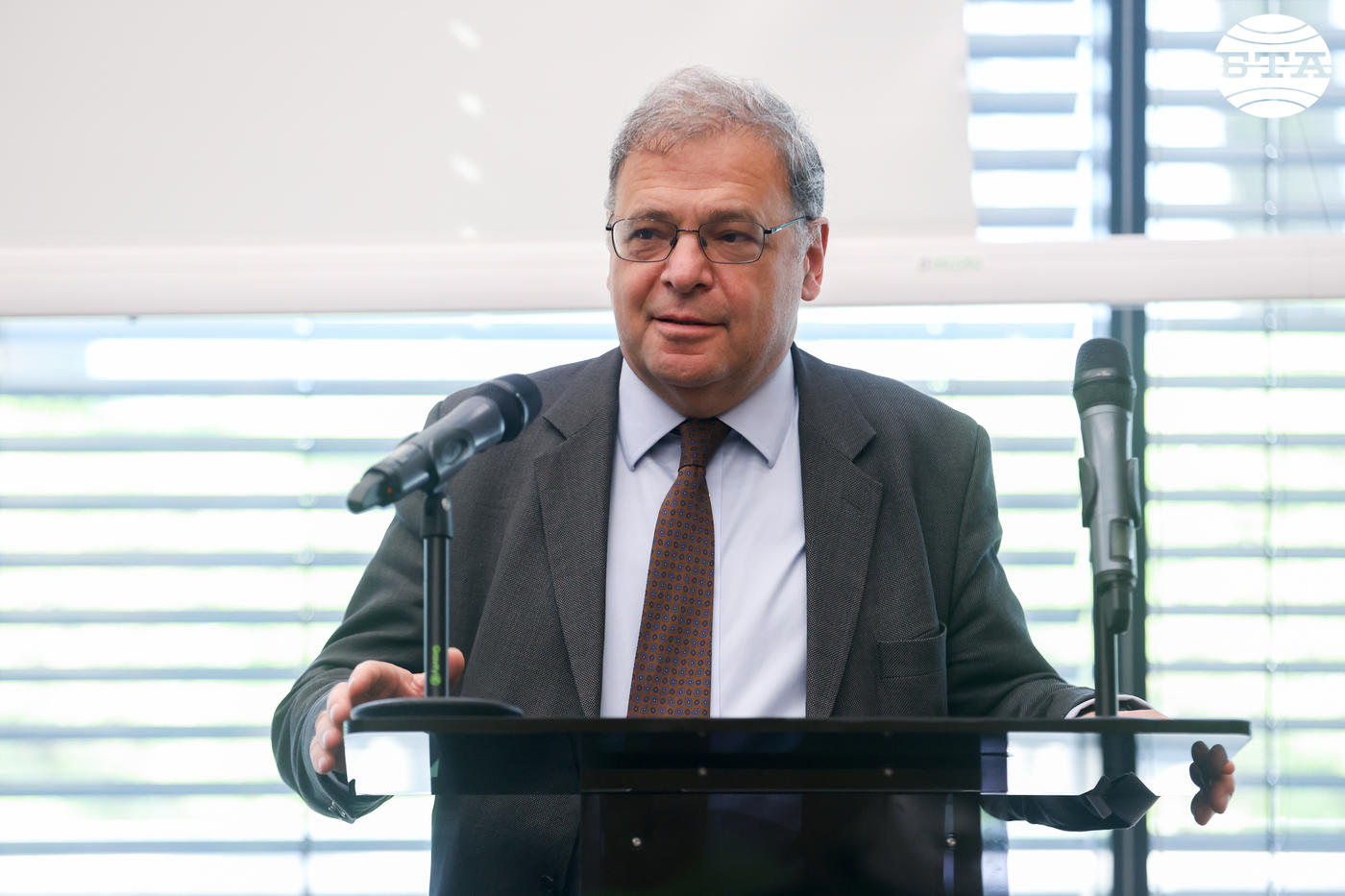
The Minister of the Environment and Water Julian Popov took part in the international conference “The Radioactive Decay of the Iron Curtain: Rethinking the Chernobyl Disaster in a Comparative Perspective” at New Bulgarian University.
In his statement, Popov emphasised the profound traumatic impact that the disaster of 26 April 1986 continues to have on Europe, Bulgaria, and generations of people four decades later.
“Chernobyl is a deep trauma. It was and remains a great trauma for the Ukrainian people, for Europe, for Bulgaria, and for Bulgarians. Like all deep and severe traumas, this one too gave rise to silence for a long time,” Minister Popov stated in his address.
For decades, society has not spoken openly enough about what happened, about the consequences for health and the environment, and about the way in which the disaster has influenced public attitudes, noted Julian Popov.
“It is difficult for me to say that I am happy or satisfied, but I feel a deep sense of satisfaction that, thanks to the people who organised this conference, this trauma can now be discussed openly. I hope that the period of silence is over,” said the Minister.
Julian Popov noted that such deep social wounds take time to come to terms with, and drew a parallel with Germany after the Second World War, when it took decades for an open conversation about the past to begin.
“Only now, 40 years later, we are truly beginning to think and talk about what happened before 1989. Unless we start discussing Chernobyl, Belene, the forced name changes and other traumatic events from our recent past openly and honestly, there is no way we can move forward,” emphasised Minister Popov.
He expressed the hope that New Bulgarian University would establish itself as a venue for public discourse and remembrance of the difficult topics from the recent history.
At the end of his speech, the Minister thanked the organisers for their efforts in initiating this conversation and stated that the Ministry of Environment and Water would continue to support such initiatives.
The forum brings together leading scientists from Bulgaria, Europe, and the USA, and aims to re-examine the political, social, and health consequences of the Chernobyl disaster, which led to increased environmental awareness, changes in attitudes towards nuclear safety, and processes linked to the collapse of the communist system in Europe.
The event is organised by New Bulgarian University, the “Prof. Ivaylo Znepolski” Institute for the Study of the Recent Past and the Centre for Academic Research, with the support of the Konrad Adenauer Foundation and the Embassy of Ukraine in Bulgaria.