Minister Julian Popov met with the Ambassador of the United Kingdom His Excellency Nathaniel CopseyMinister Julian Popov met with the Ambassador of the United Kingdom His Excellency Nathaniel Copsey
13 Mar, 2026 | 11:44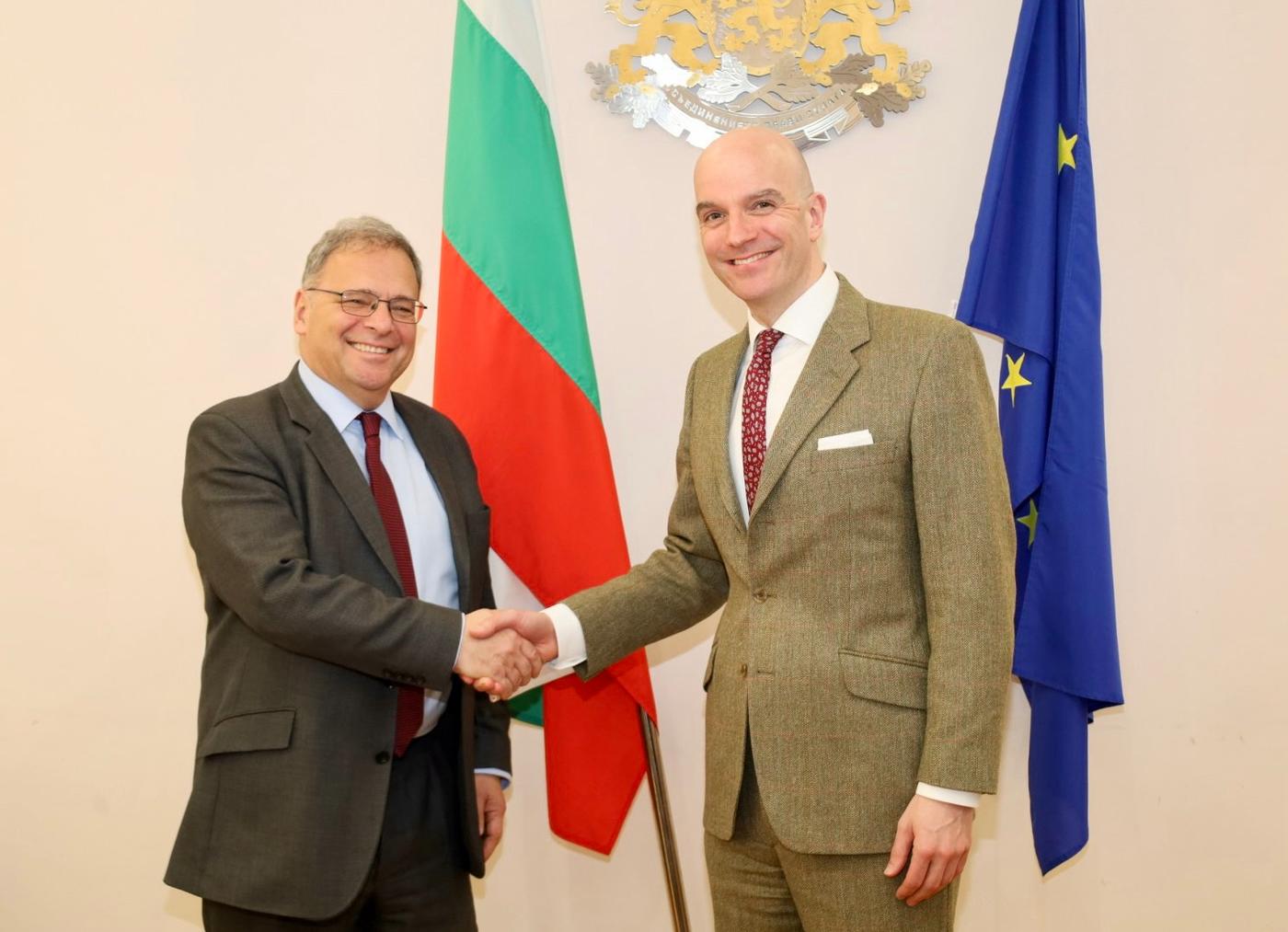
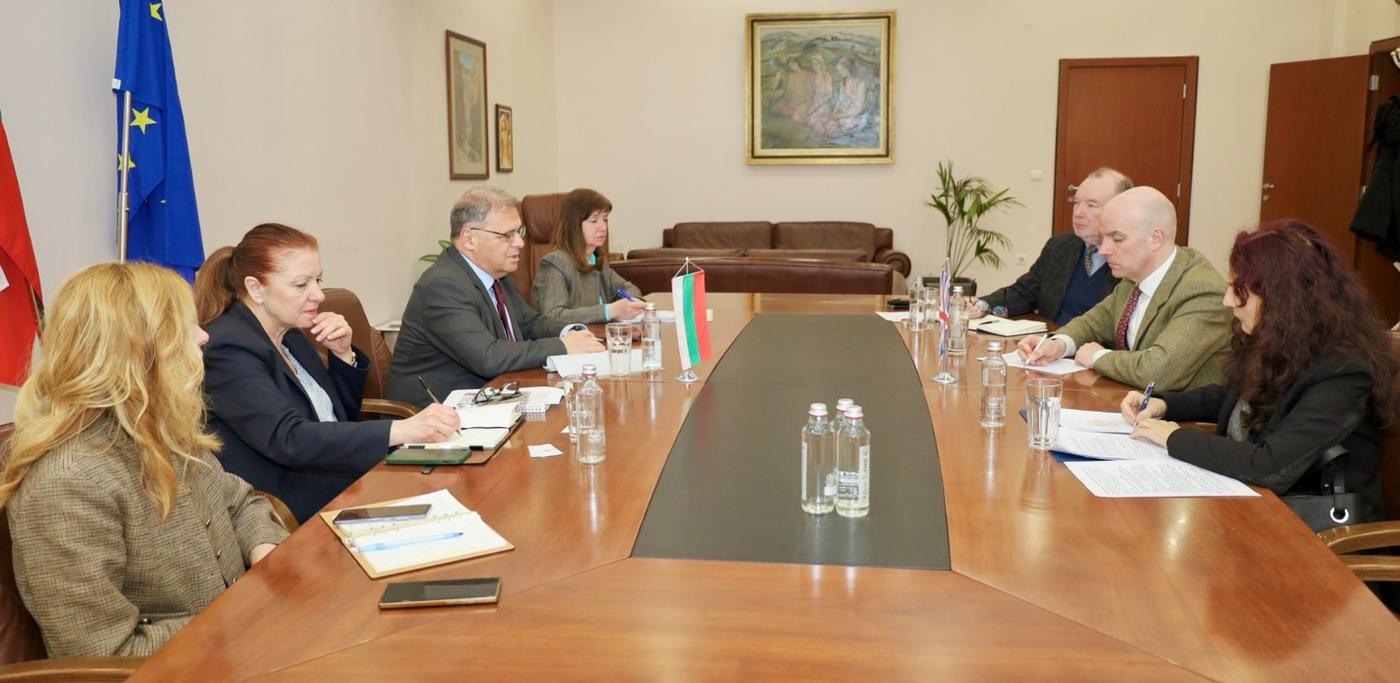
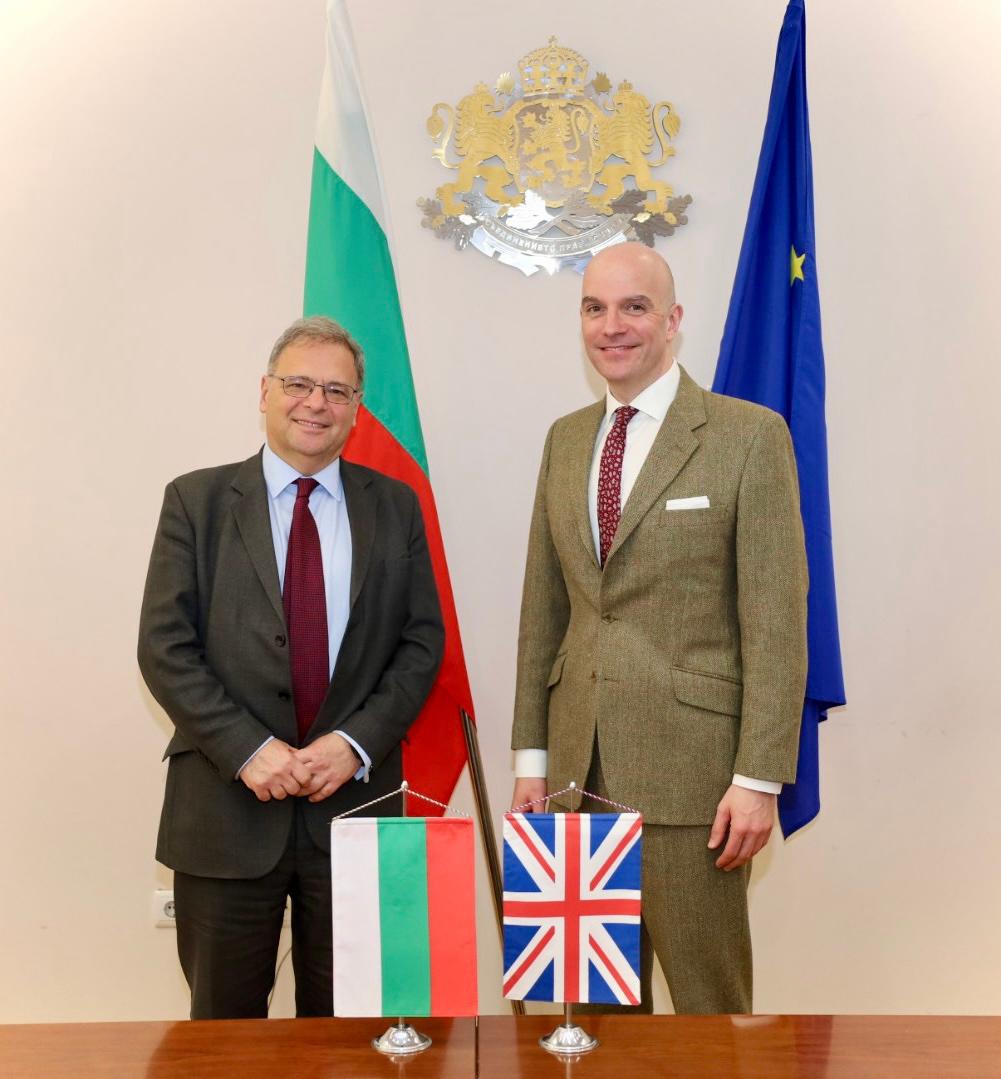
The Minister of Environment and Water Julian Popov met with the Ambassador of the United Kingdom His Excellency Nathaniel Copsey. During the meeting, issues related to bilateral relations, the implementation of environmental legislation and climate change were discussed. А shared view was established that cooperation will continue to develop on all topics of mutual interest.
With regard to climate change policies, it was emphasized that the United Kingdom and the European Union share the ambition to achieve net zero emissions, which is the basis of national policies in both countries. The Ambassador of the United Kingdom informed about the progress of the negotiations between his country and the EU on the Emissions Trading Scheme (ETS) and the EU Carbon Border Adjustment Mechanism (CBAM), which are still ongoing. Minister Popov committed to contributing to the convergence of positions and the achievement of a mutually beneficial agreement. He stressed that these instruments aim to prevent carbon leakage, to protect fair competition and to ensure the proper functioning of the linked carbon markets. The EU and UK systems share many common features and their ambitions for climate neutrality are among the highest in the world.
Ambassador Copsey raised questions regarding the implementation of environmental legislation, in particular in the area of odours. Minister Popov presented the actions taken by the Ministry of Environment and Water to find a solution, together with other relevant institutions.
Regarding the questions raised by Ambassador Copsey on product fees, Minister Popov informed that Bulgaria is following the European goals for a circular economy and “zero waste”, with the transition from waste management after its formation to a policy of prevention, reuse and inclusion back into the economic cycle. This change aims to break the link between economic growth and the generation of waste that can be harmful to the environment and human health. The financial responsibility for waste management is carried out through a product fee to the Environmental Protection Agency or through collective recovery systems (CPS), with producers being able to choose the most appropriate model for fulfilling their obligations. Persons fulfilling their obligations through CPS pay a license fee covering the costs of managing the quantities of waste. The amounts, as well as the revenues from the collected recyclable materials, are used entirely for the effective fulfillment of regulatory obligations. The license fees are determined by the recovery organizations themselves in accord with the relevant costs. The financial dimensions are currently being discussed with the various stakeholders, with results expected in the short term. The amount of the product fee for electrical and electronic equipment, as well as for batteries and accumulators, was established by the Regulation on Determining the Procedure and Amount for Payment of the Product Fee from April 2016 and has not been changed since then. The fees are based on market and economic conditions of more than ten years ago.