Minister Julian Popov: We must develop knowledge- and data-based policy that leads to tangible results
14 Apr, 2026 | 17:11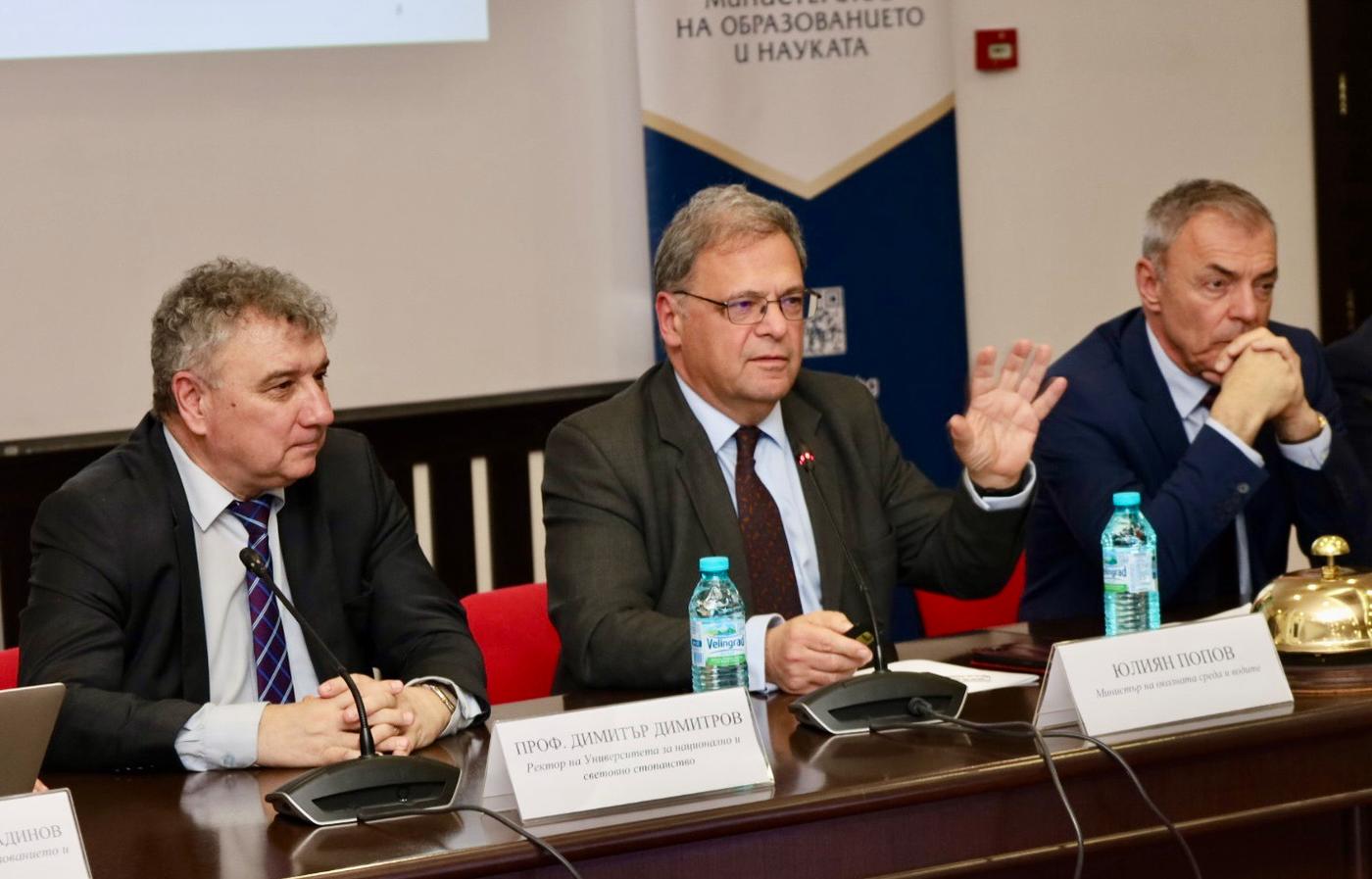
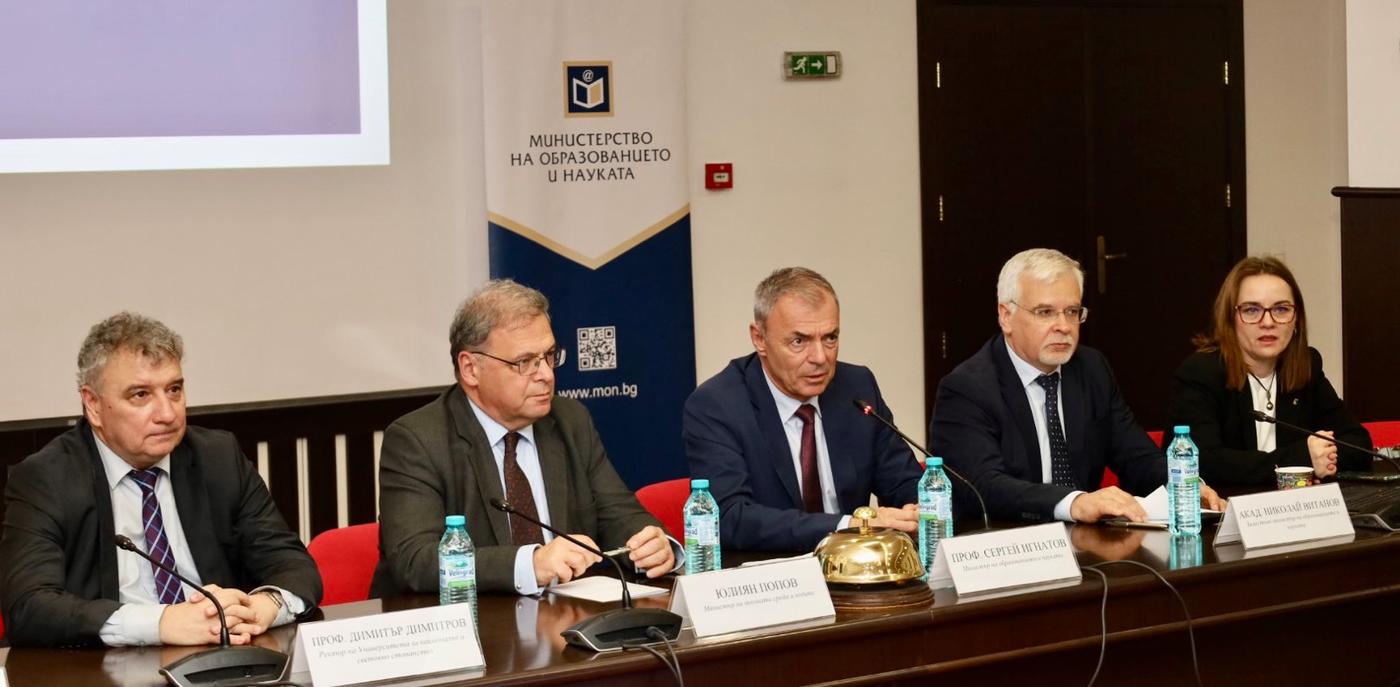
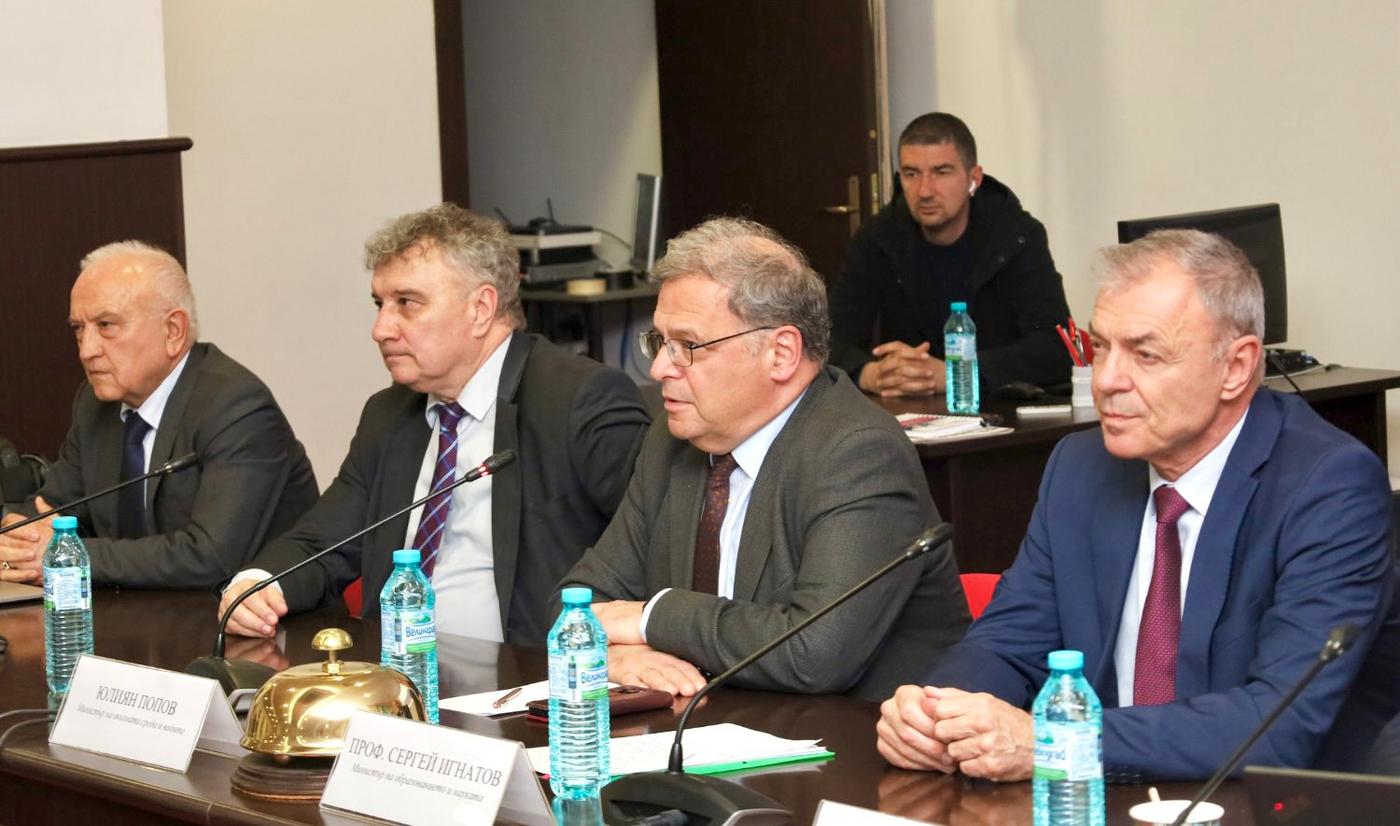
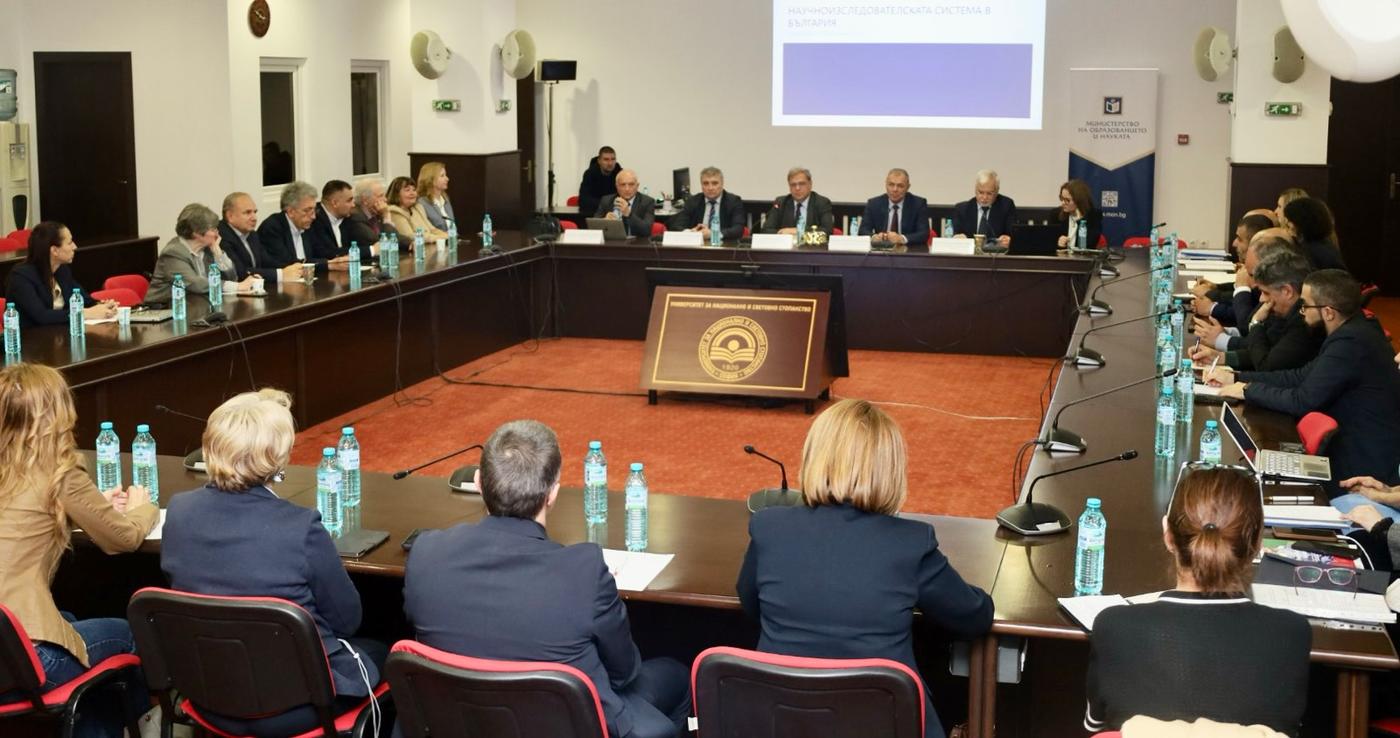
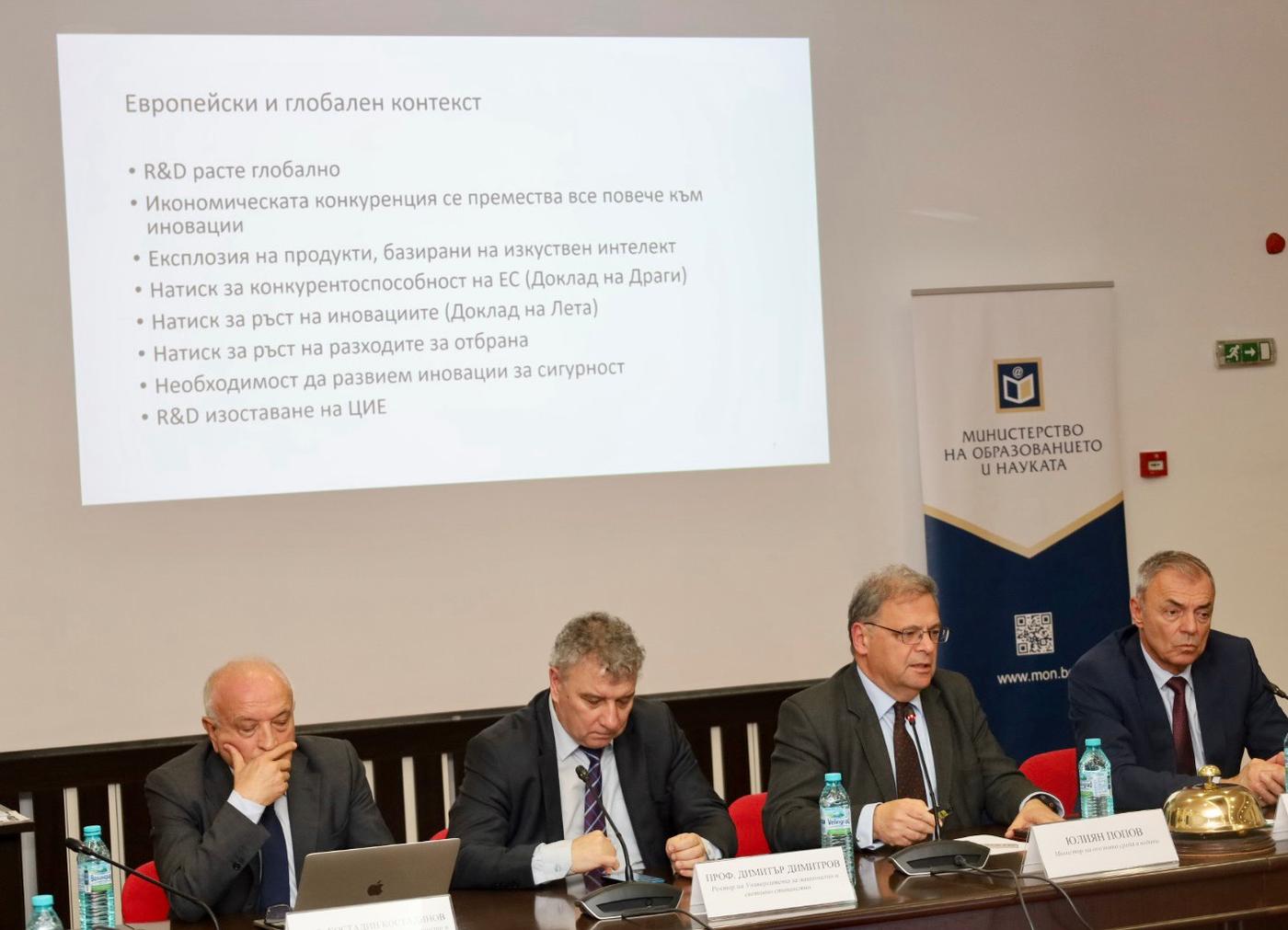
The Minister of Environment and Water Julian Popov took part in the discussion “Science and Innovation: Investment, Results, and Public Impact”, which was held at the University of National and World Economy (UNWE). During the event, Minister Popov presented an analysis of the main challenges facing the research system in Bulgaria, emphasising the low level of investment and the need for more effective management of public funds.
“Bulgaria is among the countries with the lowest share of expenditure on research and development in the European Union – around 0.8% of GDP. This is a serious national, but also regional, problem that has a direct impact on economic development and competitiveness,” the Minister noted. He emphasised that Europe lagging behind on a global scale is becoming increasingly apparent, particularly against the backdrop of China’s rapid development, where innovation and scientific research are key drivers of the economy. “This lag already has tangible consequences – we see it in the markets and in technological development,” added Popov.
The Minister highlighted the lack of sufficient science- and data-based decisions as a key problem. “In Bulgaria, decisions are often not based on research and analysis. This is a fundamental issue regarding the way we govern,” he said. In this context, Minister Popov emphasised the need to make publicly available data collected using public funds. “Access to raw data is key to analysis, modelling, and informed decision-making. The data belongs to the public and must be accessible,” he stressed.
In his speech, the Minister also raised the issue of the effectiveness of public spending on scientific research. He pointed out that a significant portion of the funds often passes through intermediaries, which reduces the actual resources available for scientific activity. “The problem is not intermediation itself, but its scale and the efficiency of how the funds are utilized,” noted Popov. As a possible solution, he highlighted the need to build in-house capacity within universities and research organisations for project management, as well as closer links between science, administration, and the business.
The minister gave examples of sectors where the lack of a scientific component leads to missed benefits, including in large-scale investments, such as the energy renovation of buildings. “Even a small proportion of funds directed towards scientific research can significantly improve the quality and effectiveness of projects,” he pointed out. According to Minister Popov, achieving a higher level of investment in science – for example, 2% of GDP – requires joint efforts by the state and the business sector, as well as the creation of incentives for private investment in research. “These are systemic issues related to the way we fund and manage science. The aim is to develop a policy based on knowledge and data that leads to tangible results,” he stated.
The Minister of Education and Science Sergei Ignatov also emphasised the need to seek additional sources of funding for science outside the state budget. Accordingt to him, there are realistic opportunities for developing the system by gathering and implementing viable proposals that can be incorporated into management programmes and realised in the long term.
In conclusion, Minister Popov outlined specific steps to improve the funding and integration of scientific research into public policies. Changes are planned to the operational programmes, aimed at increasing funding for science by around 3-5%, as well as a broader inclusion of the scientific component in all programmes of the various ministries. He emphasised the need for better coordination between institutions, scientific organisations and funding bodies, as well as more effective use of existing mechanisms, including national programmes.
“The government has an urgent need for science. This is a necessity that encompasses the economy, climate policies and the country’s overall development. All institutions have a duty to science - and at the same time need it to make informed and sustainable decisions,” stated the Minister.