Minister Manol Genov on "The Day Begins" on BNT: The Ministry of Environment and Water established serious violations and missing water bodies in the cadastre along the Black Sea coast
20 Nov, 2025 | 14:02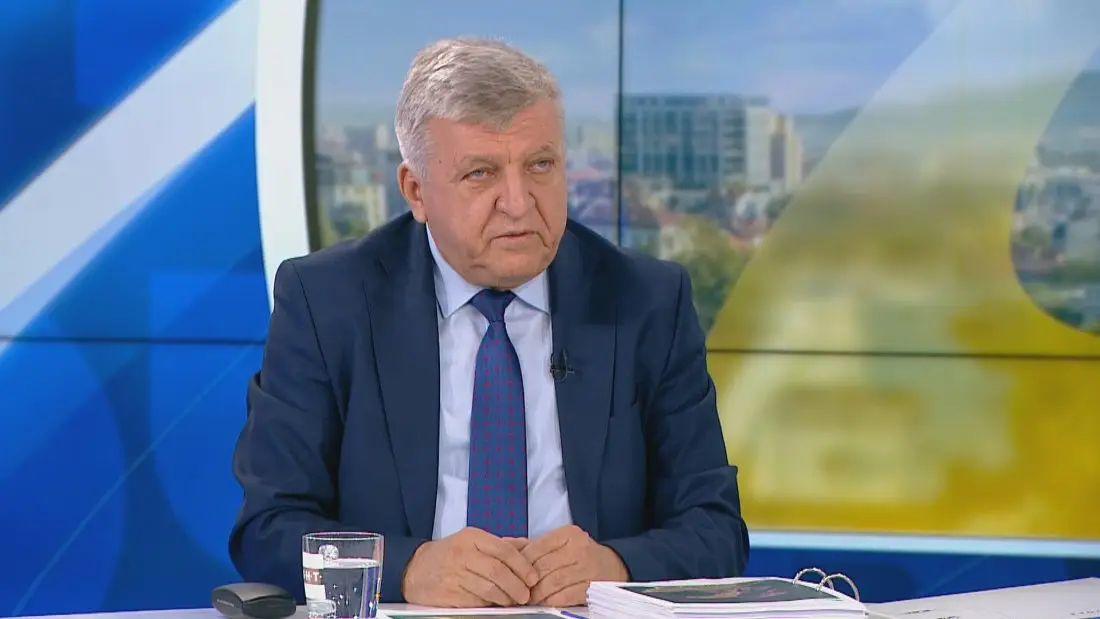
The Ministry of Environment and Water presented the results of the inspections after the floods in the Elenite region and neighboring urbanized areas. By order of Minister Manol Genov, the Basin Directorate - Black Sea Region and the other directorates compared the cadastral maps and flood risk management plans. Significant discrepancies were found, including missing water bodies in the cadastre.
Minister Genov pointed out that the causes of the disaster are complex - intense rainfall, steep ravines, a large catchment area and inadequate infrastructure, but the main factor is human intervention. The inspections did not find any available coordinating documents in the archives of the Regional Inspectorate for Environment and Water and the basin directorates for the construction activities carried out.
The analysis by the Ministry of Environment and Water reports violations in 27% of the inspected sections in the urbanized areas of Sveti Vlas, Elenite, Lozenets, Tsarevo, Sunny Beach, and Varna. The Minister emphasized that the inspections will continue throughout the country and the results have already been published on the website of the Ministry of Environment and Water.
You can watch the entire interview on "The Day Begins" on BNT HERE:
THE WHOLE INTERVIEW IN "THE DAY STARTS" ON BNT
Floods and inspections on the Black Sea Coast
Host: What is the summary of these inspections and, of course, what will be the consequences?
Manol Genov: Yes, we did the inspections. I ordered the "Basin Directorate", especially in the Black Sea region, there are orders for the other basin directorates to do these things. We juxtaposed cadastral maps with our flood risk management plans and we really came across a lot of things and a lot of discrepancies. There are some water bodies that are missing from the cadastral maps. We have talked to the Minister of Regional Development - we will even find a resource from our operational program so that these "white spots" in the cadastral maps regarding water bodies can be corrected. Ultimately, the cadastre makes changes when someone requests these. It cannot take action on its own and carry out this activity.
Host: How did these white spots come about – how did water bodies disappear, if they were there?
Manol Genov: Well, apparently, when the cadastral maps were made, the basis on which they worked... It became clear that we have water bodies, water basins that have been dry for many years. There is no water visible in this water body and initially...
Host: But where it has flowed, it will flow again, as the saying goes.
Manol Genov: Yes, where it has flowed, it will flow again. And once the water starts flowing – there is no stopping it.
Host: Exactly.
Manol Genov: There are such imperfections and I think they will be overcome. But in general, I can summarize the following: the apocalypse that happened in "Elenite" is a consequence of several complex reasons. One is the heavy, intense rains in this area; the steep ravines; the watershed; the huge mass of water that accumulated at a certain time, at this moment. But there are also problems with the infrastructure – undersized bridges, undersized culverts. But as we say in the environmental sector – the anthropogenic factor is important.
Host: Yes?
Manol Genov: This is human activity that causes damage to the environment. And this factor is at the heart of the apocalypse, I repeat once again, that happened there.
Host: And who is to blame?
Manol Genov: Well, we have done very detailed checks of what was coordinated with our institutions – respectively the Regional Inspectorate for Environment and Water, the “Basin Directorate”. We did not find any coordination documents in our archives for such actions.
Host: This is a crime.
Manol Genov: Now, you can cover a riverbed, you can build on it, but it is done according to the rules – with hydrogeological calculations, with forecasts of water runoff during sudden climate changes, which we have had recently. But you cannot build on it.
Host: What you said – excuse me – does it put the blame on the municipal authorities?
Manol Genov: Ultimately, the building permits, depending on the category of the construction, are issued by the chief architect of the respective municipality. And the responsibility also lies with the local authorities.
Host: But they must be coordinated at a higher level in accordance with the due process.
Manol Genov: Well, there is a Law on Spatial Planning. It prescribes: first, second, third category constructions are under such control; fourth, fifth are under such control. Apparently, things were divided there in this site so that they could slip through the legislation and so that this coordination and permit could be obtained. But that is the job of the Ministry of Regional Development. They have done their checks. As far as I know...
Host: Is there a discrepancy between their inspections and your inspection?
Manol Genov: No, there is no discrepancy between theirs and ours, because when these building permits are issued, when they are inspected, I have no information so far about coordination on our part.
Host: Do you talk to Minister Ivan Ivanov? What does he say about their inspections?
Manol Genov: Of course, we talk every day.
Host: And what does he say?
Manol Genov: As far as I know, the Directorate for National Construction Control has issued an order to demolish this notorious aparthotel, it is what the local authorities named it... In the building permit and in the acceptance act - I can't say - but the order will probably be appealed. But I have also seen a lot of comments here after yesterday, when I announced this at a briefing. Somehow people don't believe that we will go all the way and everyone says: "Any miracle for two days". No. I have ordered inspections in all basin directorates. I would also like to thank the employees of the basin directorates, the regional inspectorates, especially in the Black Sea region. You see this folder in front of us.
Host: You are carrying a large folder.
Manol Genov: A large folder. There should be 3-4 more of these for the entire country. And there, very clearly, in these plans of ours, it is noted - with one color the river flood is marked; sea floods; when it happened in the years; 1000-year wave; 20-year wave; type of flooding. All this is public information. And local authorities, when they issue such construction permits, should look at these maps.
Host: Here we are talking about river flooding. What is on the table is about sea flooding.
Manol Genov: Yes, the sea ones are of a certain color, the purple is for river floods.
Host: We show this to give a clear account that there is a way to predict the events that happened – that there is a mountain there that has…
Manol Genov: Yes, we also have steep slopes, steep ravines, a large watershed. And indeed, all these measures are noted in these plans of ours. Now I can’t say that they can guarantee 100%, because it is difficult to fight against nature, but when we allow compromises, it is in such situations that we see what happens.
Inspections in other regions
Host: Excuse me, more on this topic. Since you said inspections along the Black Sea coast – where are the other inspections that you do? And just to open a parenthesis – that here the chief architect of Sofia also started his inspections for such desires for construction along rivers in Sofia, etc. There is a big scandal here, by the way, between the mayor and the chief architect. So, should urban areas also be inspected?
Manol Genov: Well, look, these scandals are theirs. We cannot be the arbiter of this. But let them look at these maps of the Danube Directorate, because Sofia is part of the Danube Directorate, and there is also a part of the West-Aegean Directorate, and see what is written in them and who and when allowed all these recommendations that they have to be bypassed in this way. And I say – this is public information. We have even posted a special link on our website specifically for these inspections – anyone who is interested can familiarize themselves with the results of this inspection.
Will there be demolition of illegal buildings?
Host: Since you said that you will go all the way, Mr. Genov, does this mean that there will be demolition of illegal buildings on the Black Sea coast?
Manol Genov: You will ask this question to my colleague from regional development, because in fact the competence falls there – in the control over construction and the implementation of the Spatial Planning Act.
Host: You will provide the analysis. The inspections show 27% of the inspected areas with real violations – mainly in the urbanized territories of Sveti Vlas, Elenite, Lozenets, Tsarevo, Sunny Beach, and Varna. Where is it most critical and risky?
Manol Genov: It is most critical in the large urbanized territories – starting with Sunny Beach…
Host: All listed.
Manol Genov: Sveti Vlas, Elenite is clear, Tsarevo – separate locations, Varna – there are also such findings that we shared. And all this should alert us that when a building permit is issued… Yes, to build more, to make more floors – that is what it is. Human greed in the last 2000 years has not subsided and may have become more acute in the conditions of a market economy and in the conditions in which we live. The pursuit of profit is great, but when the pursuit of profit risks health and human lives, in my opinion, it should be severely limited and unacceptable.
Justice for the victims
Host: That's why I asked you this question - who is to blame, despite all the conventions of this question. But in the end, the people who suffered also ask this - whether there will be justice for them. People died. However, we remember that the mayor of Nessebar and the chief architect threatened to seek their rights in court, because they are being attacked.
Manol Genov: Everyone has the right to go to court and everyone has the right to appeal the relevant acts that have been issued against him.
Water shortage in Pleven and measures for next summer
Host: Let's move on to the other important topic that we talked about with you months ago - at the height of the water shortage crisis in the Pleven region. It's winter now, we forgot about this problem for a while. I hope they are already doing well there, but summer will come again. What are you doing now so that the same thing doesn't happen again?
Manol Genov: How was it, as the author said – when thunder strikes, the echo dies down.
Host: Exactly.
Manol Genov: The echo will not die down. And I must tell you that the newly established Water Board has its meetings every two weeks. Here, today there is a meeting – measures will be discussed, questions raised by water supply operators, by regional governors on problems related to water supply. But I will say one thing: eliminating water shortages is not a task that will be fulfilled overnight. We know the reasons – the outdated network. Investments are needed. Next week we will have talks with the European Commission so that we can increase the financial resources – especially for interventions in water supply networks, purification, water drainage. And I think we will achieve a better result.
What has been done specifically for Pleven
Host: If we talk specifically about Pleven – what have the authorities managed to do at the national and local level? Or did the weather and rains simply save the people of Pleven?
Manol Genov: The rain and weather helped, but I think that currently adequate measures are being taken. This is the role of the municipality – it has completely reformatted its investment program, the implementation of the budget. The funds that it was supposed to receive for public works and other activities were transformed into water and sanitation projects and rehabilitation of existing water and sanitation infrastructure.
Host: What percentage of the network has been replaced already?
Manol Genov: Well, I can’t say. This issue is not within our competence. You know that the principal of the water and sanitation operators is the Water and sanitation holding, respectively the Ministry of Regional Development. But the measures that are outlined there – I even see several announced procedures for quite large amounts, which I think will help in the next season in Pleven, so that Water and sanitation-Pleven can cope with the regime.
The big topic – how do we manage water resources
Host: In general, Mr. Minister, how do we manage our water resources? Because the saying “water treads, thirsty walks” applies in many places. How do we manage rivers – high water, low water, rainfall, snowmelt?
Manol Genov: Well, look – suddenly we went from drought to floods. This is typical of the situation, of climate change and the results of these intense rainfalls. I must tell you that over the past year, since the beginning of the mandate, we have been extremely restrictive in water management. For us, the main task is to manage this resource properly. I can tell you – we did the math: we have saved about 2 billion cubic meters of water. This is approximately four Iskar dams in terms of quantity. We have been restrictive in energy, in irrigation, because the priority is drinking and domestic water supply.
Host: Are there irrigation pipes?
Manol Genov: Well, somewhere there are pipes, elsewhere there are canals.
Host: Something has remained.
Manol Genov: We know that the infrastructure has not been touched for many years, so to speak – it has not been replaced, it has not been rehabilitated. I see a good desire in the Ministry of Agriculture and in "Irrigation Systems" to be able to deal with some of the problems they have, especially with the losses. But this year we will be even stricter. I am not threatening them, but I want to say that we will be extremely restrictive in terms of wasting water quantities. We will also review small hydroelectric power plants that have been built all over the country, because in the management plans of the basin directorates, which are a strategic document for water management, it is written that we may not provide water for technical purposes to such types of facilities when there is low water and drought.
Host: Has this happened?
Manol Genov: It has happened, yes. It has happened, and it happened this year, but let's not do product positioning - where, how, and who did not receive the necessary quantities they needed for their business.
Host: But it is very important, this is very important. In the Kazanlak region, if memory serves me correctly, there were some photos in the summer – how dry it was, etc. You also mentioned the hydroelectric power plants in our previous conversation. Everything you have said so far brings me back to a criticism that we heard from the former Minister of Environment and Water Emil Dimitrov, who even said that there is manipulation of the data for a day – what is written, what passes, what does not pass. And thanks to… a bit like the Devil reading the Gospel – whoever reads the data how, they say “There is no problem”. And in fact there is a problem and it is hidden.
Manol Genov: Well, look now, I will remind my former colleague that he had to deal with a pilot project for accurate data along the Iskar River. I can say that we revived this project, restarted it and now we are yet to upgrade 12 rivers with equipment, with the relevant sensors, with the relevant real measurement.
Host: This is wonderful, the project is wonderful.
Manol Genov: And all this, I mean, we will do it mostly with European money and it will be financed a little from the state budget. So in terms of…
Host: But I was asking you about the data.
Manol Genov: We get the data from our colleagues from the National Institute of Meteorology and Hydrology. They monitor the quantities, they monitor the water quantities everywhere, the river flows, the levels in the dams. We also get information from “Irrigation Systems” about their facilities. We get information from National Electricity Company about their facilities. I am talking about the dams – I think I have understood correctly.
Host: Yes, exactly.
Manol Genov: So we get accurate data – when there is an accurate measurement. When we measure the water from “Irrigation Systems” on a rake of a canal, and the canal is a little wider or narrower, or there is sediment, and we calculate an amount…
Host: Okay, there is no manipulation according to you.
Manol Genov: … I can’t say that it will be 101% true. But these are our possibilities. We will invest in such equipment, we will invest in such type of facilities, so that we can monitor at least the large river basins in real time.
The Agreement on the Arda Cascade and Greece
Host: To move on to other topics – we are moving towards the end of our conversation – did I miss anything and if I did, forgive me, but tell me: what happened to the decision on Arda, Greece, etc.? I don’t know how far this conflict has gone.
Manol Genov: It is not a conflict, it is simply an agreement between the Ministry of Energy and the regional government of the Eastern Macedonia and Thrace region.
Host: And what is the agreement?
Manol Genov: There is an agreement between the Ministry of Energy and the relevant administrative unit on the territory of the Republic of Greece. We have not had any claims from the Greek side regarding the violation of this agreement. To reassure the people and many others…
Host: So we continue to give them water, right?
Manol Genov: … about the Arda cascade, who speculated that we give the water for free.
Host: Yes.
Manol Genov: No. Bulgaria sold a service to Greece – storage and regulated water supply.
Host: For what period and for how much did we sell?
Manol Genov: The agreement is for one year – this is for the irrigation season. Now again at the beginning of the year I assume that this issue will be raised again and the corresponding protocol will be concluded. We are constantly monitoring the levels of the dams in the Arda cascade, there they reach 80–90%. If we look at today – there is precipitation in this area, exactly where the water catchment of these dams is, so we have no worries with the Arda cascade and the quantities of water there. The problems are in the Podbalkana, where, as I told you, Koprinka and Zhrebchevo are slowly filling up at the moment.
Host: About the waters…
Manol Genov: But it is still good that the inflow is greater than the outflow.
Host: We did not talk about the waters in specifics – only about the thefts and the secondary interceptions. But apart from water management, let's talk a little about state governance. Let's talk about BSP - the situation your party is in, after everything that happened, after the Constitutional Court's ruling. And perhaps in the context of the budget. Speaking of the budget - there are secondary budget administrators in your ministry who are ready to protest. What can you do for them? Because the budget, according to the BSP leader, is the most social in 20 years.
Manol Genov: Now, I don't know who came up with this argument that opposes one type of work to another type of work. Because who did this work for - that very huge funds were poured into civil servants? It's easy for me at the Ministry of Environment and Water, because if we make a comparative characteristic, in the Ministry of Environment and Water, labor is paid the least compared to other ministries.
Host: Why is it easy for you then?
Manol Genov: Last year, in the 2025 budget, I can say that it is the minister's merit - we managed to win a 20% increase, to somewhat compensate for the lag in this structure. But the budget is as it is. Now this year I see that the increase in administrative expenses everywhere is 5%. And I can say: the Ministry of Environment and Water needs great expert potential. We manage huge financial resources. This is the "Environment" program, we have the Environmental Impact Assessment, the Norwegian funding program - part of it is with us, the Swiss program - part of it is with us. And this requires people with high expertise. We want to have uncorrupted employees in the regional inspections, in the basin directorates - employees who must be uncompromising in their work, not to allow all that we talked about a moment ago, and all these actions on the environment. They are the people who protect nature. But the remuneration of labor, which is with them, hardly guarantees the influx of new expert potential, of young people.
Host: What is the average salary?
Manol Genov: We need specialists in climatology, specialists in hydrometeorology.
Host: How much do they earn?
Manol Genov: I can't tell you exactly how much they earn now.
Host: A little.
Manol Genov: They earn less than in other administrations. And for me, this opposition that has arisen is unacceptable - civil servants like this, how many there are, and how to reduce them. And at the same time, the business wants administrative services. We and I, as a minister, regularly receive calls about why correspondence is delayed. Correspondence is delayed because there is no expertise. Our people who work in these institutions - in the regional environmental directorates, in the basin directorates that are in the country - are extremely busy.
Host: Then?
Manol Genov: And what do we want? On the one hand, we want to destroy these people as payment for their labor, to humiliate them.
Host: I understand. And then how does the BSP feel in government, including with this budget that is being proposed and which even the Prime Minister did not like? In the end.
Manol Genov: The budget is the possible one. BSP is in government. We see that a year has passed since then and everyone is evluating this year - how it has passed. I see that there cannot be any other alternative, except the one it has as a parliamentary majority and as an executive branch. And I see that people are increasingly convinced of this. The BSP in this complex coalition - I assume that none of the partners is comfortable with being in this type of coalition and governing with these political entities, but understand - there is no other alternative. And BSP in this government is what it can be. And all these predictions about the premature death of BSP, of the United Left are greatly exaggerated and are circulating as rumors. I want to tell you that during this period the BSP leadership was subjected to many provocations, many challenges.
Host: Provocations from whom?
Manol Genov: A variety of them – from opponents, from ill-wishers, from former structures that led BSP and were there. But these are normal human things and I think that the death of BSP is greatly exaggerated and prematurely announced. So I will say it again – BSP is what it can be in this government, and I think you have seen convincingly that in this coalition BSP is a factor that is difficult to avoid. It is also visible in the budget, it is also visible in the attitude towards local authorities, it is visible in everything that we as BSP ministers in this government do every day.