Minister Rositsa Karamfilova: The Ministry of Environment and Water will uphold the rule of law, effective oversight, and the modernization of environmental policies
01 Jul, 2026 | 18:57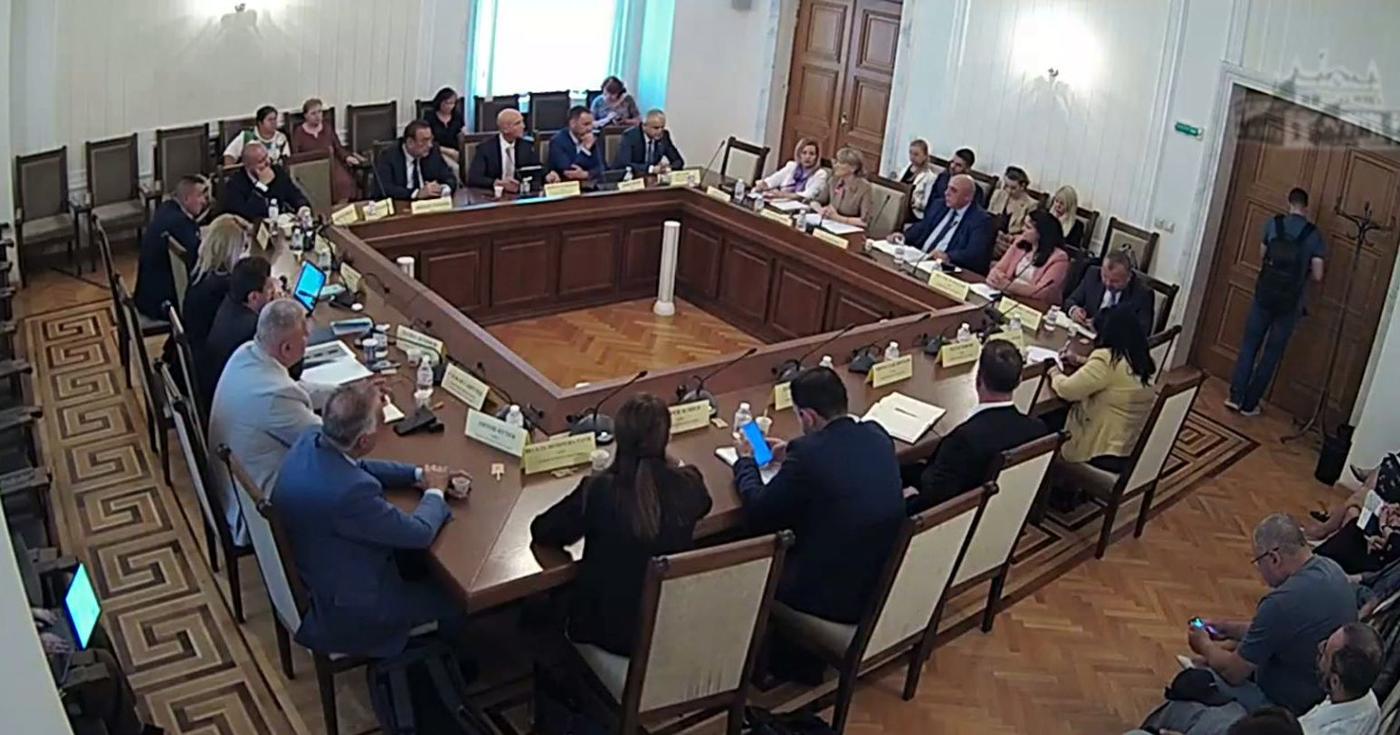
- The minister presented her vision for the sector’s development to the Parliamentary Committee on Environment and Water
Rule of law. Independent oversight. Less administrative burden. Greater transparency and strong expertise.
These are the key priorities that the Minister of Environment and Water Rositsa Karamfilova outlined at the first meeting of the Parliamentary Committee on Environment and Water. She emphasized the modernization of environmental legislation, improving the effectiveness of oversight activities, and building a stronger, more predictable, and modern administration.
“Environmental policy cannot be used as a tool for exerting pressure, nor can it become hostage to other interests or policies. We are all equal before the law, and environmental legislation must be applied equally to everyone.” With these words, Minister Karamfilova outlined the principle that will underpin the work of the Ministry of Environment and Water.
The upcoming changes will not be limited to legislative amendments. The ambition is for the Ministry of Environment and Water to establish itself as a modern, predictable, and effective institution that protects the public interest while simultaneously reducing the administrative burden on citizens and businesses. To this end, a comprehensive review of environmental legislation is already underway, aimed at streamlining administrative procedures, accelerating digitization, and introducing more effective sanctions with a real deterrent effect against violators.
Another priority for the Ministry of Environment and Water is to improve the effectiveness of its oversight activities. The Ministry will analyze opportunities to improve the organization of its work in order to promote greater transparency, more predictable administrative procedures, and more effective use of expert resources.
Strengthening the system’s expert capacity occupies a special place in the presented vision. Efforts will be directed both toward preserving accumulated expertise and toward attracting new specialists—engineers, chemists, biologists, ecologists, and hydraulic engineers. The optimization of the administrative structure should provide more opportunities for the development of experts and greater efficiency for the institution as a whole.
One of the key topics at the meeting was the waste management reform. The Ministry of Environment and Water will continue to work actively with municipalities to prepare for the implementation of the “polluter pays” principle, providing the necessary methodological, technical, and financial support. At the same time, efforts will continue to fulfill Bulgaria’s European commitments and mitigate the risk of sanctions against the country.
“Waste should be viewed as a resource, not as a problem.” This understanding will form the basis of future policies aimed at increasing separate collection, reuse, and recycling, as well as transparency in waste management.
In conclusion, Minister Karamfilova emphasized that reforms in the environmental policy sector require consistency, expertise, and constructive partnership between the executive and legislative branches:
“We have the will to make the necessary changes in a sustainable manner. Our goal is greater transparency, stronger oversight, a modern administration, and better protection of the public interest. We are counting on active dialogue with the National Assembly, because environmental policies require consistency, professionalism, and joint efforts.”