The MOEW is working to reduce tension between bears and humans based on accurate population size data
17 Sep, 2025 | 12:13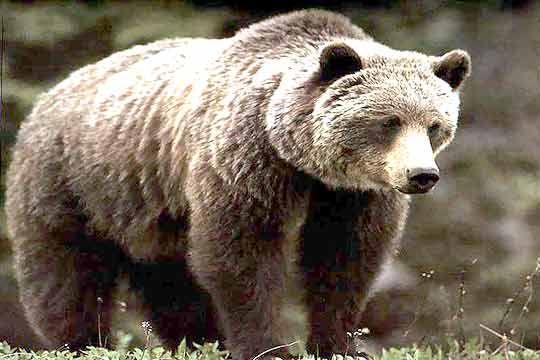
The data of the Executive Environment Agency is not about the “absence of bears” in the region of the Central Stara Planina
The brown bear (Ursus arctos) is a species with the highest protection according to European and Bulgarian legislation. Bulgaria, together with Croatia, Slovenia, Albania, Montenegro, Greece, Serbia, Romania, North Macedonia, etc. is among the few countries with a preserved brown bear population in Europe. This is an indicator that our nature, and in particular the forests in our region, are well preserved.
The preserved biodiversity is one of the greatest strategic advantages of Bulgaria and we should continue its protection and conservation. The role of the Ministry of Environment and Water (MOEW) is to monitor strict compliance with the legislation that places the brown bear under strict protection, combining the management of the species with the needs of people who live and work near its habitats.
After the frequent cases of bears entering settlements in the Central Balkan Mountains region, speculative claims have emerged about the number of brown bears in the area of the State Hunting Reserve “Rositsa”. It was stated that there were 180 bears around the location, while according to data from the Executive Environment Agency (EEA), there were no animals on the territory.
This claim is not true. According to data from the EEA, in the Central Balkan Mountains, monitoring is carried out on the territory of the National Park “Central Balkan”, the Nature Park “Bulgarka”, and the state forestry and hunting reserves on the territory of the Protected Area BG0001493 “Central Balkan – Buffer”, with SHR “Rositsa” being part of this territory. Over the years, data has shown the presence of 60 to 109 bears. The data varies from year to year, as the monitoring is not a census of individuals, but rather a monitoring of trends in the population of the species. From 2011 to 2024, the routes are visited twice a year, and the presence of a brown bear in this farm has been registered every year. Tracks, vital activity, including excrement and marking behavior of the brown bear have been observed. This clearly shows that the data of the EEA are not about the absence of bears in this territory.
In addition, the number of bears on the territory of the Rositsa Wildlife Sanctuary cannot exceed that of the bears found in the entire monitored territory. Data from the farm's website indicate that its area is slightly over 13000 ha. The home range of a female bear is on average about 1500 to 2000 ha (with an absolute minimum of 500 ha), and for males it could reach 3000, even 4000 ha. Given this, the claim that 180 bears live on an area of 13000 ha is biologically unfounded.
The Ministry of Environment and Water is guided by the principle that effective conservation and management of the brown bear should be carried out on the basis of correct data about the size of the population. To this end, the EEA is upgrading the process, and a project to determine the number of the brown bear species through DNA analysis is already underway. It is funded by the Environment Program and is being implemented for the first time in Bulgaria. Together with experts from the EEA, five of the six state forestry enterprises and the directorates of the three national parks are participating in the implementation. In order to ensure completeness of the data, samples are collected from the entire territory of the bear's distribution in the country and are sent for analysis and processing in a laboratory in Slovenia. Field work on collecting excrement samples for genetic analysis began at the end of June and will continue until the end of November this year. The samples are sent for analysis and processing in a laboratory in Slovenia. The transportation will take place in two stages – in October and December of this year, with the results of the isolation, genotyping and evaluation of the data obtained expected in early 2027. The DNA method is the most modern way to monitor and establish the number of a given species. The results are expected to help more effectively protect and manage the brown bear species.
It is well known that coexistence with large predators has been a way of life for centuries in our lands. In recent decades, depopulation of villages has been observed, and this is especially noticeable in small villages and remote hamlets that are located in forest and mountainous areas and border the habitats of bears. This becomes a prerequisite for the animals to enter people's farms in these partially depopulated places.
The Ministry has been working for years to reduce the prerequisites for conflict between bears and humans. As part of these efforts, approximately 600000 leva have been invested under the Environment Program – funds with which five of the six state forestry enterprises are implementing a project to provide a food base for the species. In recent years, about 400 electric shepherds have been distributed, shepherd dogs have been trained, prevention projects have been developed, and since 2007 compensation has been paid for damage caused by bears to domestic animals and apiaries.
For example, for the region of the Middle Stara Planina and neighboring regions, in 2023, over 20 claims for damages worth over 15400 leva were filed and paid on the territory of the Regional Inspectorate for Environment and Water - Veliko Tarnovo, and for 2024, the number of claims paid in the region was 7 for a total of 4187 leva. For comparison, for the same period in the region of the Western Rhodopes, where the most bears are located, 137 claims for damages worth about 219000 leva were paid. This year to date, 4 claims for damages worth 5490 leva have been paid for the Regional Inspectorate for Environment and Water - Veliko Tarnovo, and for the same period in the Regional Inspectorate for Environment and Water - Smolyan, 65 claims for damages have been registered and about 132000 leva have been paid.
Not all bears cause damage. Usually, these are specimens that have learned that the presence of humans can provide food. For this reason, although the species is protected, the law provides for the shooting of problematic specimens that regularly cause damage or their behavior is a threat to people. Shooting permits are issued by the Ministry of Agriculture and Food, and 5 shooting permits have been issued for 2024.
Of key importance for preventing damage by bears is that prevention is carried out at the local level, by taking adequate actions to limit the entry of animals into mountain settlements where animals and people have common habitats.
The Ministry of Environment and Water calls for the timely and regular removal of food and household waste, especially in areas with a tourist flow that generates a lot of food waste. Often, in these places, removal is carried out only once or twice a month, which leads to the accumulation of food waste and the smell released attracts animals. Landfills as a source of “easy food” create a potential danger for direct contact of bears with humans and unwanted incidents. Therefore, it is important not to create unregulated landfills and not to throw away the remains of dead domestic animals, and unfortunately both practices are widespread in the country.
The most effective method of protecting a private farm is to fence it with an electric fence (electric shepherd). The advantages of electric fences are that they are easier and faster to build compared to ordinary fences made of wood, iron or wire. They can be used in remote areas, far from roads and settlements and prevent the uncontrolled movement of animals.
Last but not least, feeding small bears and generally accustoming bears to "artificial" food carries a risk - they lose their fear of humans and begin to associate their smell with easy food. In this way, you unintentionally create problematic bears that will inevitably cause damage.