Water transfer from the River Danube to Lake Srebarna resumes
14 Jul, 2026 | 14:31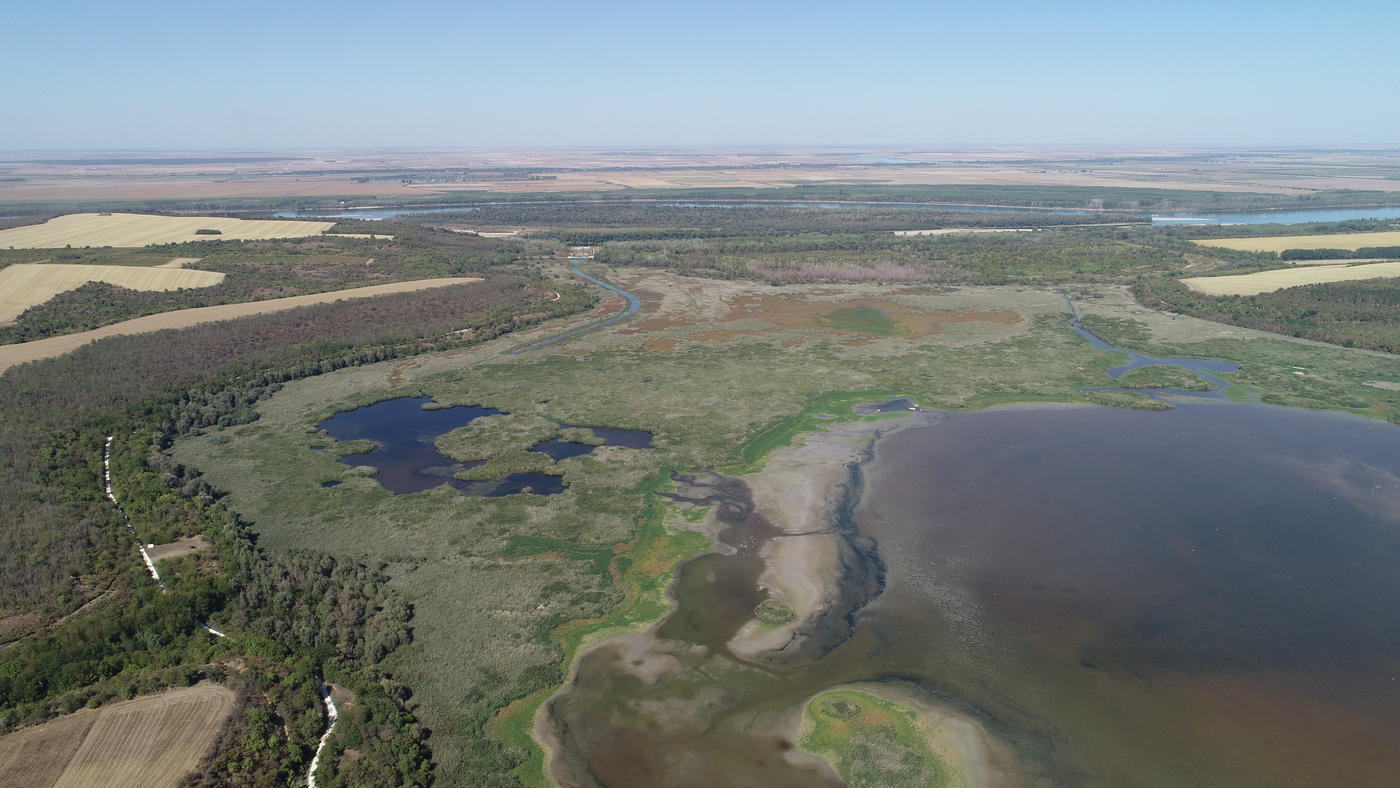
- The measure was first implemented last summer, which saved the ecosystem from drying up
Low water levels in the Danube for a second year have once again necessitated the forced pumping of water from the river to Srebarna Lake via the Western Canal. This was announced at a joint press conference today by the mayor of Silistra Municipality Alexander Sabanov and the director of the Regional Inspectorate of Environment and Water - Ruse, Daud Ibryam.
A partial state of emergency has also been declared as of today within the territory of Silistra Municipality and the boundaries of the Srebarna Nature Reserve. Also present at the press conference were the Regional Governor of Silistra, Eng. Nikolay Nedelchev, and Commissioner Evlogi Stamov, Director of the Regional Directorate for Fire Safety and Civil Protection. All activities within the reserve relating to water transfer will be coordinated by the directors of the Inspectorate and the General Directorate for Fire Safety and Civil Protection, as well as by the mayor of the municipality.
At present, the water level in the lake within the boundaries of the Srebarna Managed Reserve is very low - approximately one metre below the optimal level for the development of the ecosystem. Some of the peripheral water bodies have dried up. If this trend continues, it is possible that sections of the central water body will also dry up. This will create conditions for an adverse impact on the fish fauna and plants inhabiting the aquatic environment, and will have an indirect effect on amphibians, reptiles, birds, and mammals. All of this necessitates the reintroduction of measures to prevent the consequences of the low water level in the lake.
The forced supply of water to the lake from the river will be carried out using hydraulic pump units provided by the General Directorate for Fire Safety and Civil Protection. Work will commence shortly at the site designated last year. The two rigid pipes, which were donated free of charge by ‘Water Supply and Sewerage’ - Ruse Ltd during last year’s specialised operation, will be used, and flexible hoses are also to be installed.
The water regime of Lake Srebarna is directly dependent on the water levels of the Danube River. The lake is supplied with fresh water via a direct connection to the existing Eastern and Western Canals. Filling is only possible when the river is at higher levels, above 12 metres, and occurs underground when water levels are equal. Over the last 3-4 years, there has been a sustained decline in the water level of the Danube River. The last time the lake was fully filled from the river was in May 2023. This year in March, the hydraulic structures (sluices) were used to fill the lake over a period of two to three days, but this was not sufficiently effective. The reasons for this negative trend are complex: numerous hydraulic structures built along the river and almost all major tributaries, electricity generation, high water consumption in the Danube catchment area and, last but not least, climate change linked to rising winter temperatures, reduced snowfall and extremely high temperatures in summer.
Forced pumping of water from the Danube into the lake took place for the first time last year; during this unprecedented operation, which lasted almost three months, over 3 million m³ of water was introduced into the reserve’s water bodies. This prevented the ecosystem from drying out.
“At present, the water bodies have not completely dried up; the reeds are fresh; no time will be wasted in filling the Western Canal; and a faster rise in the water level in the central water body is expected,” Daud Ibryam explained to journalists.
The Regional Inspectorate of Environment and Water - Ruse has carried out surveys on the location of the karst springs, which serve to replenish and maintain the water in the lake, and on the construction of a permanent pumping station. In the short term, funding is expected to be provided by the Ministry of the Environment and Water to purchase two pumps and a generator, which will be operated by the inspectorate until the station is built.